Choosing Courage

Sometime in 2019 I fell into reading presidential biographies. I don’t entirely know why. Perhaps it’s because I was never a good student of history, and this was my way of making up for lost time. Maybe it’s because the complexity of their role somehow informs the ones I’ve held and hold. In seeing the way they navigated the various challenges of their time, I’m given a deeper reservoir to draw from as I work through the issues of my own.

We know the supposed lauded: Lincoln, Washington, the Roosevelts – each imperfect, but revered all the same. If you were to ask who the worst president of the United States was, however, most people would point to James Buchanan – despite whatever you may feel about any in recent memory. Serving one term from 1857-1861, he was America’s fifteenth president. He was the only president to never marry and, before Biden, the only one to come from Pennsylvania – neither of which contribute to his abysmal standing in history.

Strangely enough, Buchanan isn’t deemed the worst because he had some salacious affair or because he assembled a corrupt cabinet. It wasn’t anything he did. In fact, most people would consider Buchanan the worst president in American history because of what he did not do. He didn’t challenge slavery. He didn’t stop the succession of southern states from the union. When the Civil War began brewing under his nose, instead of acting, he bid his time until Lincoln took office. On paper he looked like the ideal candidate, a wealth of political experience under his belt. But when it came to that national office, he was largely passive, and that passivity ranks him among the lowest presidents in American history.

These days I’ve been reflecting on the reciprocal relationship of leadership and time. It seems to me the times form the leader even as the leader acts in a given time. While there are moments of relative tranquility and prosperity, oftentimes serious, lasting leadership emerges at times of crisis. We remember leaders for the way they’re able to not only interpret the moment at hand, but also act in such a clear, decisive way as to effect positive change. To come to a crisis then and not act isn’t just an abdication of responsibility, it’s a failure of leadership. If history is any indication to us, the only thing worse than taking the wrong action is to take no action at all, to fail to understand that inaction is a form of action.

When I reflect on my own life and leadership, my deeper regrets aren’t from the times when I said or did the wrong thing – those times exist, to be sure – but it’s the moments I didn’t say or do anything at all. Moments when I was too paralyzed by fear of failure or public opinion to act one way or another.

I’ve often admired people who just seem to know what to do. In the fog of confusion, the way forward seems clear in their mind. But perhaps, in those moments when we don’t know what to do, the best course of action is to do something, to be bold enough and courageous enough to commit to some sort of next step and trust that if we’re wrong, God is sovereign and will not let his plan be thwarted by human weakness.

The reality is that leadership isn’t just what you do. It’s also what you don’t. You can wring your hands hoping the moment passes and while that may work sometimes, other times it creates new problems. Leadership, then, demands courage and courage, we know, isn’t the absence of fear but the ability to move forward despite it. Like love or faith, courage isn’t always something we are imbued with as much as it’s something we must choose in a moment.

This takes us back to Buchanan. In a time when the country was splitting at the seams, the man overseeing it hated conflict. That hatred of conflict saw him trying to play the middle, but instead of making peace, he only drew ire from all sides. He was, to borrow a term from Friedman, a “peace-monger” and what’s most telling, in both his and Herbert Hoover’s case, the failure of leadership led to the emergence of the man for the job. Someone whose clear, decisive leadership would push the country through crisis and into the future.

As leaders, the task for each of us is to diagnose the times, the problem facing our contexts, and, after assessing what we contribute to the situation (both naturally and supernaturally), courageously move forward to meet the moment, trusting God with the result.

My Top Books of 2021

The problem with setting a low goal for yourself is that you just might reach it. While I recognize how absurd it might be to say that 60 books in a year is “low”, when you look at previous years, you understand.

The beauty of plowing through 80+ books in a year is the sense that you can read a bit more indiscriminately. Read whatever you want, you’ve got plenty of ground to cover. There’s a confidence in knowing that no matter what you read, great or terrible, there’s an ending on the other side. In ratcheting back to 60, I felt the constriction. I had to start strategically planning what books would be next. Every read felt like it had to count.

The sad part is I don’t feel like I read any better, wider, or that the books I read were any longer in length. I just simply read less. There were periods of time where I would’ve normally chosen to read that this year I chose not to. Why? Because I didn’t have to try so hard.

When initially thinking about this year, I had hoped that somewhere during the year my daughter would figure out her life and begin sleeping regularly. This was the case briefly. Then, we got pregnant with baby number two. All this to say that next year might be even more challenging to carve out space and time to read. Still, I’m finding it vital not just to my personal and spiritual life but also my inner life as a leader. Reading stimulates thoughts and begins internal dialogues I wouldn’t have otherwise. As busy as things get, I want to continue to make it a practice and continue giving myself lofty reading goals.

What’s surprising to me is that these might not be the best books I read – you could make the argument that any given book on my overall list was better than one listed at the top – but these are the ones that made their impression.

In no particular order:

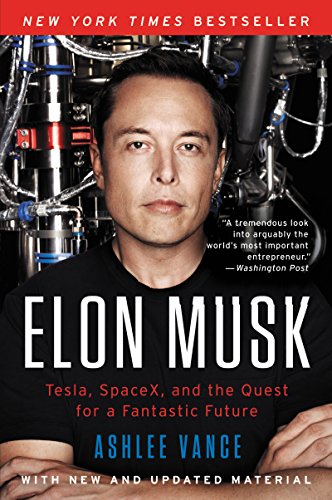
  1. Elon Musk – Ashlee Vance
Elon Musk: Tesla, SpaceX, and the Quest for a Fantastic Future, Vance,  Ashlee, eBook - Amazon.com

As strange as it sounds, I actually didn’t know much of anything about Elon Musk before reading this book. I, of course, was familiar with Tesla and SpaceX but that’s about it. Even now, I don’t know much about him or his work since this book. I’m not a fanboy nor am I Musk-ian leader but it made me think about leadership profiles, futuristic thinking, and transcendent purposes that inspire unconventional, if not innovative business practices. It made me think about start-ups, the bold invitations they’re built on, and the people they attract. At times, it reads like hero worship, but even so, it’s still fascinating.

2. The Meaning Revolution – Fred Kofman

The Meaning Revolution: The Power of Transcendent Leadership: Kofman, Fred,  Hoffman, Reid: 9781524760731: Amazon.com: Books

I don’t know how much I’d recommend this entire book. Honestly, it’s a slog, but I don’t know if I read a book this year that shaped my understanding of organizations more than this one. Kofman gets into the main tension all organizations face. Namely, if a department does what’s best for them, they will invariably cripple the entire organization. As much as people think their titles are their jobs, their real job is to help the team win. Staff and departments must suboptimize for the organization to thrive. The only way you can get people to do that is through transcendent leadership. That premise alone made it worth being on the top of the list. The introduction is worth the price to me.

3. Leading With a Limp – Dan Allender

Leading with a Limp: Take Full Advantage of Your Most Powerful Weakness:  Allender, Dan B.: 9781578569526: Amazon.com: Books

I honestly I don’t know if I’ve read a more depressing book on leadership than this one, but it was that same candor I found refreshing. Here’s someone who’s been there, done that, and sees through all the B.S. Rather than a clarion call to triumphalist leadership, it’s a sobering look at the summons given to us. Considering this current cultural moment we find ourselves in, his thoughts on reluctant leaders felt prescient.

4. Love is an Orientation – Andrew Marin

Amazon.com: Love Is an Orientation: Elevating the Conversation with the Gay  Community: 9780830836260: Marin, Andrew, McLaren, Brian: Books

This book was recommended to me nearly ten years ago and, for better or worse, I just got around to it (I think that should tell you something about giving me book recommendations). Any missionary that embeds their life with another group of people over a long period of time – especially, when that group of people is a community they wouldn’t ordinarily belong – will always have my utmost respect. You get the sense that Marin’s life was disrupted by Jesus, and he’s done his best to be obedient. To me, this also seems to say something about how calling works. He doesn’t answer all your questions, but he elevates the conversation to where dialogue between two different, often warring parties are possible. I will say, though, because of the gap between its commendation and my reading of it, I couldn’t help but wonder if others more versed in this conversation would find this book outdated.

5. The Second Mountain – David Brooks

The Second Mountain: The Quest for a Moral Life: Brooks, David:  9780812993264: Amazon.com: Books

This was one of those books I saw in everyone’s top reads last year, so when my spiritual director mentioned it to me, I knew I had to read it. There’s a reason it’s on everyone’s list. It’s an absolute tour de force that could only have been written by someone who has (or is) climbing that second mountain. It’s written with both the pain and humility that comes from failure or hardship and yet, while it’s sad in some respects, it’s also hopeful and insightful. In some ways, it’s the perfect foil to Elon Musk.

Other notables:

  1. American Kingpin – Nick Bilton
Amazon.com: American Kingpin: The Epic Hunt for the Criminal Mastermind  Behind the Silk Road eBook : Bilton, Nick: Kindle Store

If you’re looking to read something fun and absolutely wild, this is the book for you. I practically live under a rock, so I had never heard of the Silk Road before this, but this is real life Breaking Bad type stuff, cloaked in libertarian philosophy. It’s so well-written you would think it’s a novel or true-crime television. It will have you on the edge of your seat.

2. Surprised by Paradox – Jen Pollock Michel

Surprised by Paradox: The Promise of "And" in an Either-Or World: Michel,  Jen Pollock, Ramsey, Russ: 9780830845644: Amazon.com: Books

Evaluating a book can be tricky business. Sometimes a book has wonderful ideas but is poorly executed. Other times, the book is beautifully written but lacks substance. Jen Pollock Michel excels in both. This is the second book I’ve read from her where time and time again I found myself grateful to God for her, her insight, and her ability to articulate it so well.

3. Caste – Isabelle Wilkerson

Amazon.com: Caste (Oprah's Book Club): The Origins of Our Discontents eBook  : Wilkerson, Isabel: Kindle Store

When The Warmth of Other Suns is your first book, how do you follow that up? While Caste doesn’t carry the same narrative power that made her first book so remarkable, the ideas and the parallels she draws to history are incredible. I don’t know if I’ve ever considered America’s racial dynamics as a caste system but when she explains it, it makes so much sense it’s scary. Once again, she and I are not related but if she wanted to claim me, I’d gladly graft our family trees together.

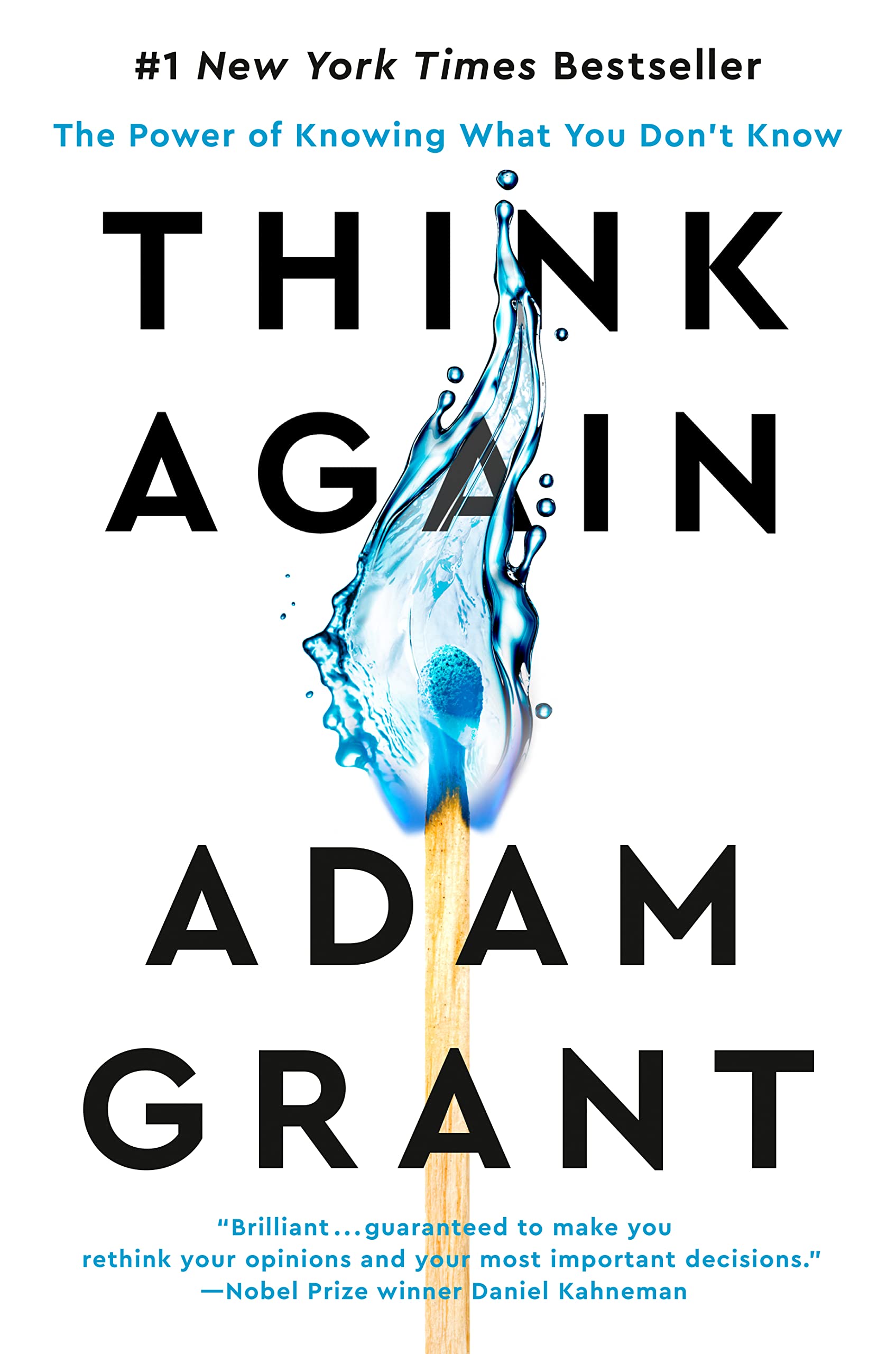
4. Think Again – Adam Grant

Think Again: The Power of Knowing What You Don't Know: Grant, Adam:  9781984878106: Amazon.com: Books

Honestly, seeing this book on everyone else’s list made me reconsider its placement on mine. I was such a big fan of Originals that I had unbelievably high hopes for this one. It’s not that I thought this book was bad. It just wasn’t Originals. Revisiting it now though, I’m reminded what I appreciated about this book. This isn’t one to just listen to. It’s one to physically own, mark, and take notes from. Shoutout to Adam Grant and everyone else who made me, for lack of a better phrase, think again.

5. Reading While Black – Esau McCaulley

Reading While Black: African American Biblical Interpretation as an  Exercise in Hope: McCaulley, Esau: 9780830854868: Amazon.com: Books

Honestly, this book probably deserves to be higher but it’s just a matter of when I read it. The theological and hermeneutical work by him is serious.! Once again, one of those books that you can’t listen to, but you need to physically own. The way he uses scripture to talk about the pursuit of justice even as he later uses it to talk about the call to forgive is incredible. In a world demanding binary options, McCaulley isn’t interested in sides. He’s interested in the Bible. He made me want to be a biblical scholar.

The Full List (asterisk indicates audiobook):

January

  1. Hood Feminism* – Mikki Kendall
  2. Jesus Outside the Lines* – Scott Sauls
  3. Bad Blood* – John Carreyou
  4. Tempered Resilience* – Tod Bolsinger
  5. Elon Musk* – Ashlee Vance
  6. Ready or Not – Doug Paul

February

  1. A Promised Land* – Barack Obama
  2. Caste* – Isabel Wilkerson
  3. Didn’t See It Coming – Carey Nieuwhof
  4. One Blood* – John Perkins

March

  1. Dust Tracks on a Road* – Zora Neale Hurston
  2. American Kingpin* – Nick Bilton
  3. Dear Girls* – Ali Wong
  4. The Four Tendencies* – Gretchen Reuben
  5. The Meaning Revolution – Fred Kofman

April

  1. The Second Mountain* – David Brooks
  2. The Ride of a Lifetime* – Robert Iger
  3. The Devil in White City* – Erik Larson
  4. Thinking, Fast and Slow* – Daniel Kahneman
  5. With Open Hands – Henri J.M. Nouwen

May

  1. Visioneering* – Andy Stanley
  2. Think Again* – Adam Grant
  3. Mission Drift* – Peter Greer
  4. Steve Jobs* – Walter Isaacson
  5. Begin Again* – Eddie S. Glaude
  6. Everything I Never Told You* – Celeste Ng

June

  1. American Dirt* – Jeanine Cummins
  2. Blue Ocean Strategy* – W. Chan Kim, Renee Mauborgne
  3. Permanent Record* – Edward Snowden
  4. The Vanishing Half* – Britt Bennet
  5. Right Here, Right Now – Lance Ford, Alan Hirsch

July

  1. The Membership Economy* – Robbie Kellman Baxter
  2. Discovering God’s Will Together* – Ruth Haley Barton
  3. Concrete Rose* – Angie Thomas
  4. The End of the Affair – Graham Greene
  5. On the Verge – Dave Ferguson & Alan Hirsch
  6. Love is an Orientation – Andrew Marin
  7. The First Time Manager – Loren Belker, Jim McCormick, Gary Topchik

August

  1. Leading with a Limp – Dan Allender
  2. Why We Drive* – Matthew Crawford
  3. Fault Lines* – Voddie Baucham
  4. Surprised by Paradox* – Jen Pollock Michel
  5. The Fruit of the Spirit – Thomas Trask & Wayde Goodall

September

  1. When Narcissism Comes to Church* – Chuck DeGroat
  2. The Starfish and the Spirit* – Lance Ford, Alan Hirsch, and Rob Wegner
  3. How Music Works* – David Byrne
  4. Executive Presence* – Sylvia Ann Hewlett
  5. Cultivating the Fruit of the Spirit – Christopher J.H. Wright
  6. Surprised by Joy* – C.S. Lewis
  7. Influencer – Brittany Hennessy

October

  1. The Madness of Crowds* – Douglas Murray
  2. Grace Will Lead Us Home* – Jennifer Berry Hawes
  3. Something Needs to Change* – David Platt
  4. When* – David Pink

November

  1. Empire of the Summer Moon* – S.C. Gwynne
  2. There There* – Tommy Orange
  3. The Divine Conspiracy – Dallas Willard

December

  1. Bury My Heart at Wounded Knee* – Dee Brown
  2. Leadership in Turbulent Times* – Doris Kearns Goodwin
  3. Reading While Black* – Esau McCaulley  

Rethinking Abundance

Back when the Underground was on 7th Avenue there was a room we would sometimes use for prayer. Located at the top of the stairs, it had an off-white carpet and a variety of pillows, couches, and chairs. Bibles and blank sheets of paper sat in the back right corner. There was even a small boombox you could use for ambiance. Perhaps it was only fitting that, like the place in Acts 1, this space became affectionately known as the “upper room.” When we held our week of 24-hour prayer, we prayed in the upper room.

One time though, the Underground designed this space to help our community engage issues of justice and global poverty. I remember a display talking about how the world would look if it was made up of a hundred people. There were backpacks and other school supplies coupled with information about how much it cost to sponsor a child’s education. It was there I learned that 20% of the world consumed 80% of the world’s resources and just how many people lived on less than two dollars a day.

What I couldn’t shake though was how little it cost to help kids in third world countries. For $10 I could send a year’s worth of school supplies to a kid who desperately needed it. For $18, I could help a kid fight mosquito-related illness we took for granted. Perhaps it stuck out to me because I was a college student, and, like most college students, I didn’t have a lot of money. It felt like I was always coming up against the wall of my own need. Nothing ever seemed like it was enough. Yet with the money I would use for lunch, I could buy kid’s school supplies for a year. For a dollar a day, I could keep a kid from starving. Suddenly, it felt like I had all the money in the world. Ten bucks wouldn’t get me much at the mall, but, in the hands of God, it could save a life. If ten dollars could do that, what could twenty dollars do? What could God do with a hundred dollars?

I wanted to give it all away, to galvanize friends and family to help end poverty. Of course, I know now it’s more complicated than that, but at the time it felt like the power was in our hands. The decisions we made had real effects on the global poor. How could we live lives that reflected their existence? Maybe, as one person, I could only do so much but together we could do something massive. In the hands of God, what seems like a little is actually more than enough.

This seems to be a recurring theme in Scripture. I think of Gideon’s 300 soldiers or the feeding of the five thousand. We see what we have and know it’s not enough, yet our willingness to take whatever little we have and give it to Jesus allows for something incredible to happen. He creates abundance from scarcity.

Lately I’ve been fascinated by the idea that certain things can only be gained by giving them away. This, too, seems to be recurring theme in Scripture. Proverbs talks about how “one gives freely, yet grows all the richer; another withholds what he should give, and only suffers want.” What if there are things in our lives that can only be gained by giving them away?

Andy Crouch has explored this concept as it pertains to power in several of his books. A surefire way to feel powerless is to pursue power. To do so is to quickly realize the limits of your command. You may oppress or subdue others for the sake of self-preservation, but you’ll never feel secure. You’ll know that at any moment it can be taken from you. When you view power as a limited resource, it slips through your hands. But what if the secret is not how much power we have, but how much we give away? What if the two are directly proportional?

I distinctly remember a meeting where I wanted to empower the students I was working with. I was trying to take student leadership seriously and so I gave them the authority to determine what would be an effective strategy for reaching the campus. I might’ve even put the name of the club up for grabs, I don’t quite remember. After some deliberation, the most mature student, the one with the most potential to overthrow me turned to me and asked me what I thought. I gave them power and in turn they gave it back to me. They recognized my authority.

Contrast that to my early days of staff work where I fought tooth and nail to get students to listen to me. I’d recruit for conferences only to have them choose other ones. I even remember one particular day, leaving the office on a call with one of my “leaders” trying to convince them not to waste their time and energy on a particularly troublesome student. Despite all my protestations, they refused to listen. They were adamant they could help. In a fit of rage, I hurled my keys to the ground and broke my keychain.  I don’t remember quite what I said but I’m pretty sure it was something about me being the staff worker and them having to listen to me. It was in that moment I knew I’d lost them. I’d always said if I had to pull that card, it’s because didn’t actually have authority in their life and there I was. Those were some of the hardest days in my ministry career. In the absence of real power and authority, I tried to take it by force which only reinforced the reality that I didn’t have it.

Perhaps this is why Jesus said those who try to save their lives will lose them but those who are willing to lose them for his sake will find them. In holding onto our lives, we realize their limits, their inability to be all that we hoped or dreamed of. Like money and power, our lives are found in giving them away for Jesus’ sake. The reality is that to live in abundance, to give away the little we think we have, is a sacrifice. It does cost us something. It costed the poor widow her mite. But on the other side of the sacrifice is something we could never lose, which, according to Jim Eliot, isn’t a foolish trade whatsoever.

Hurry and the Illusion of Control

For as long as I can remember, our community has taken the first week of the year to fast and intentionally seek the face of God. This year, because I felt like God was calling me to abide in him, I decided to take that week to practice the discipline of slowness. Practically, this meant minimizing multitasking. If I made breakfast while my daughter watched, I didn’t listen to an audiobook at the same time. If I was running late to a meeting, I let myself be late. If I drove somewhere, I did my best to drive the speed limit. And if on the off chance I had to go to the grocery store, I didn’t pick the shortest line.  

At first, it sounded ridiculous. After all, when people are fasting from tangible, measurable things like food or social media, what does mean to fast from hurry? But if you ever want to know how badly you struggle with hurry, try eliminating it.

I am a naturally hurried individual. I scramble to make breakfast, rush to get to my desk, race to get to the gym, and hurry to get home. Sometimes I think it’s because I enjoy the rush of running late and trying to make the impossible happen, but I think there’s more to it than that. Often at the heart of my hurry is the belief I am not enough. Perhaps, if I could get more things done, I will be seen as legitimate in the eyes of my peers. I will be seen as worthy in the eyes of God. As an enneagram type 2, this has always been a struggle for me (I am what others think of me) but having a child has made this all the more complex.

The birth of our daughter has shown me, time and again, my life is not my own. Faced with your own powerlessness, you can respond one of a two ways. You can lie down and admit defeat, or you can grasp at whatever you can to regain control. Hurry has been my attempt at the latter.

Often, I find, hurry is less about pace and more about posture. I don’t know if I’m moving faster as much as I just think that I am. But in hurrying a vicious cycle begins. I’m anxious because I’m hurried, and I hurry because I’m anxious. Slowing down interrupts that cycle. It’s literally impossible to be anxious about getting to your destination on time when you’re driving the speed limit.

This has become especially real to me the past couple of days. I feel myself being overcome with hurry again, the familiar lack of control and reactive grasps. In that place, I sense God’s invitation to slow down and be reminded once again that who I am and what I’m worth is not contingent on what I can produce. To sit in the reality that, for all my frenetic activity, neither worry nor hurry adds a single hour to my life. What would it be to live in the conscious awareness of God’s presence? To be awake to the gift of each moment? Perhaps it’s only possible when we slow down long enough to receive it.

Some Thoughts on Holiness and Fasting

If there’s one thing that can be said about the Christian faith, it’s that it’s one of paradox and tension. Aside from believing Jesus is fully God and fully man, we believe that God himself is both imminent and transcendent, both merciful and just, in control over all things while still allowing freedom and autonomy. Even the trinity itself is paradoxical. 

Lately, I’ve been fascinated by the already/becoming tension we find in Scripture. Of course we’re familiar with the already/not-yet nature of God’s kingdom, but what is also true is that we are saved even as we are being saved. On the one hand, we are as saved as we are ever going to be and, on the other, we become more like Jesus over time (or at least we’re supposed to). This, too, is sanctification. Scripture talks about being holy (1 Peter 2) even as we are called to be holy (1 Peter 1:15-16).  We simultaneously hold a status while still needing to choose to live into it. 

We know that some of this has to do with submission or surrender. But lately I’ve been thinking about the role of sacrifice. If holiness is about nearness to God and choosing life over things that represent or promote death, then I have the option to evaluate everything in my life based on whether or not it aligns with that greater purpose. Do the shows I watch symbolize life or death? Does the music I listen to promote life or death? What would my relationship with God be like if I chose life in all those areas? Intimacy is related to holiness. Holiness, to an extent, is directly correlated to sacrifice. How holy do you want to be? Well, how much are you willing to give up? 

Toward the end of last year, I felt spurred to do toward the end of last year. Of course, I had things I was praying for, but what I found more interesting was how it kickstarted my walk with God. Although I knew God always hears me, I prayed with more expectation. I listened in prayer more attentively. I believed that God would move in a special way. It wasn’t that I thought I was getting God’s attention as much as I was hyper-aware of my need for God. Earlier in the year I had wrestled with what it looked like to return to the things I did at first (Revelation 2:5). Dropping everything at the drop of a hat because I felt a tug in my spirit definitely fit in that category. Strangely enough, the very act of fasting felt like an answered prayer. It got me wondering what if this were a regular part of my life.

In his classic, Celebration of Discipline, Richard Foster talks about how spiritual disciplines in themselves don’t mean anything but can act as the gateway to a deeper work. It can’t replace desire – without desire, disciplines become another form of law – but sometimes when desire wanes, discipline can help. I don’t think I understood that until this fast. It got me thinking about how much I’m willing to sacrifice and what would my spiritual life look like if I fasted more, sacrificed more. Foster records the thoughts of a person who fasted one day a week for two years. My fast was inspired by the story of a person who fasts the first three days of every month. Even my old pastor in Cayman fasted every Wednesday until lunch time. If I admire and envy the spiritual depth of those people, am I willing to enter into their spiritual rhythms? At first, it sounded like too great of a cost. Those three days invited me to reconsider. 

My Top Books of 2020

Heading into 2020 I knew I was going to read considerably less. Not only was our daughter on the way, but I also planned on listening to podcasts. As small as that may seem, every minute spent listening to podcasts or music meant time away from “reading.” Rather than setting some ambitious goal of trying to read more than any year prior, I settled for 60 and then toyed around with the possibility of reading 60 hard copy books. That did not happen.

What I didn’t anticipate was how much having a child would throw me into a mental fog. If you look at the number of books read before June and after, you’ll notice a considerable decline. What it doesn’t show is just how much I struggled to actually comprehend what I was reading. I’m sure a number of books post-June belong on the top of the list but, for one reason or another, simply didn’t make it.

Unfortunately, I don’t think my list was nearly as diverse this year as years prior. I almost intentionally did not dive deep into race. There aren’t as many women, Christian books, or feminist texts here. Instead, I read a lot of nonfiction — memoirs, essays, biographies, etc. This wasn’t intentional. I just kept coming back to it and occasionally had to tell myself to read something else.

Going forward into 2021, I’m hoping to find some sort of normal but I’m keeping my goals low in the event that proves not to be the case.

Anyhow, here are my top five in no particular order.

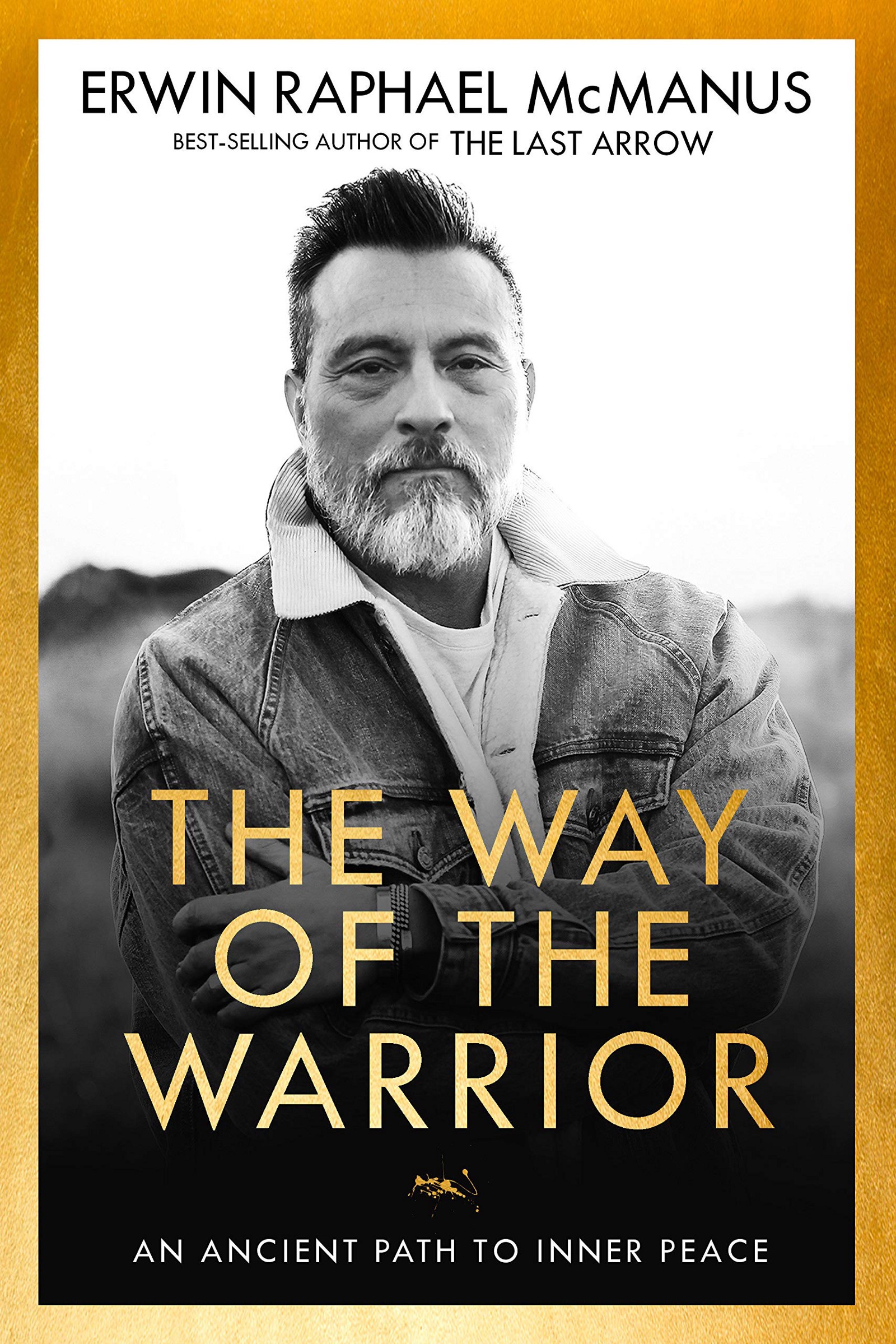
1. Way of the Warrior — Erwin McManus

Part of what I’ve found over the years is that unexpectedness is what makes a book stand out to me. I was a big fan of Artisan Soul when I read it a number of years ago but was mildly disappointed by The Last Arrow. The Way of the Warrior sounded new age to me and yet when I read it, it was anything but. Sure, I still struggle with McManus in his descriptions of himself and I’m not sure how to reconcile his ministry beginnings with his current gig, but it was the first book of the year I wished I had a hard copy of because I wanted to highlight so much of it. The idea of fighting for inner peace and the role that plays in spiritual wholeness was interesting one.

2. Missoula — Jon Krakauer

There are a few authors I attribute my return to reading. Jon Krakauer is one of them. I read Into the Wild as a high school senior and immediately fell in love with the story and Krakauer’s ability to tell it. I read Under the Banner of Heaven and Into Thin Air that same year.

Missoula feels weird to put on my top list because the nature of the subject: sexual assault on college campuses and the difficulty in securing justice for victims. But I loved it for the same reason I loved Gary Haugen’s The Locust Effect. It opens your eyes to reality and once you see it, you can’t unsee it. It changes you in some way. This combined with Chanel Miller’s Know My Name and Jia Tolentino’s essay on University of Virginia in Trick Mirror sent me spinning. This hit particularly close to home having a daughter on the way.

3. Notes from a Young Black Chef — Kwame Onwuachi

A number of years ago, Misty Copeland’s Life in Motion made it to the top of my list. Hers was a Cinderella story of sorts with beautiful writing and a life that kept moving up. I loved Onwuachi for a similar reason, but the difference is that his doesn’t end with a bowtie ending. Instead, there’s humility. It’s a remarkable story of trying and failing, lostness and redemption, and how food can communicate story. This book showed me that we are more than the worst things that have happened to us. Each of us are greater than the sum of our mistakes. Even when all seems lost, the narrative of our lives is still being written. Mikel Jollett’s Hollywood Park could also be thrown in here for a recommendation.

4. Reappearing Church — Mark Sayers

 book was instrumental for our staff team toward the tail-end of last year. We were trying to understand what was happening in our community and the church of as whole. Sayers helps us understand revival not as a moment in history but as a wave or a cycle. What if the church isn’t dying or in the decline? What if this is the pattern of renewal, waves of revival receding before the presence of God washes in again? What if our role is to contend for the presence of God?

5. Leading Change — John Kotter

This is almost embarrassing. To an extent, it shows how boring I’ve become. Part of it is that I recently finished a program on Ministry Leadership and change management was one of the things we tackled. Some of it too is that books that tackle things I know absolutely nothing about also tend to be the most memorable. There’s a reason this is a classic in understanding organizational change and why it so often fails to take hold. Written in 1996, it might be dated but I imagine it still carries relevance for today.

As always, some honorable mentions.

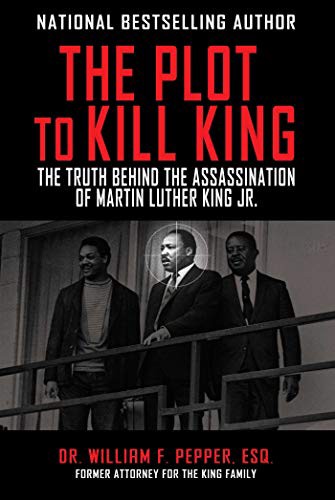
6. The Plot to Kill King — William Pepper

I don’t consider myself a conspiracy theorist, but maybe that’s what made this book so compelling. Pepper lays a compelling case that MLK’s assassination wasn’t a lone gunman. Rather it was a government conspiracy to silence a leader who opposed the Vietnam War, was advocating for economic justice, and was considering a presidential run. Maybe I would be more skeptical from anybody else, but this book has a couple of things going for it. First, Pepper is a lawyer that’s risked life and limb and has dedicated a considerable amount trying to find Martin Luther King’s real killer. Second, in doing so, he’s worked closely with King’s family and associates. They agree that there’s more to the story. In fact, in her stunning memoir, Coretta Scott King mentions that she doesn’t think Ray did it either. Another one I wish people read with me so I could discuss it.

7. Unsettling Truths — Mark Charles and Soong-Chan Rah

I don’t know if I agree with all the conclusions drawn here yet I think they ask some important questions and make some important observations. When people are tempted to blindly buy into the hype of a thing, you need people who will hold feet to the fire and tell the truth. If you know anything about liminal experiences, this book was one for me. Undoubtedly the most important book I read this year.

8. I Am Malala — Malala Yousafzai

This book makes it on principle. I don’t think I have as much courage or intelligence in my whole body as this woman does in the tip of her pinky. I take so much for granted being a man born in America (black yes, but a man nonetheless). This book was an experience in crossing cultures and learning of one girl’s brave fight against the Taliban for the education of her people.

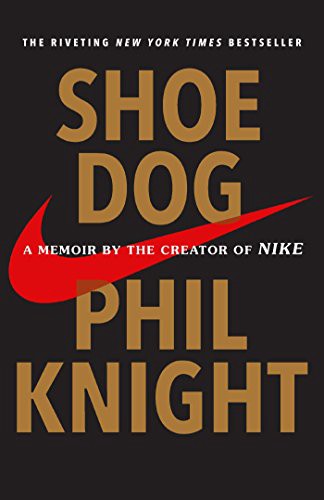
9. Shoe Dog — Phil Knight

There’s a reason this book is mentioned everywhere, especially for CEOs. It’s a moving story. I’ve never seen Nike as an underdog of a company, nor have I ever thought about the brand it’s tried to create. I’ve always associated it with excellence (the best athletes in the world are sponsored by Nike) and yet this book made me a fan. It’s a guy, a dream, and the ragtag group of people crazy enough to see it through. The result is one of the most successful companies ever. It tugs on all the right emotions.

10. Gospel Fluency — Jeff Vanderstelt

While there are some wonderful tools and ideas in here, I loved this book simply for the way it challenged me. Do I believe the gospel as much as Jeff Vanderstelt does? If I do, why don’t I share it more? And if I don’t, what does that say about me?

The Full List (asterisks are for audiobooks):

January

1. Grant* — Ron Chernow

2. Letters to the Church* — Francis Chan

3. Dream Teams — Shane Snow

4. Digital Minimalism — Cal Newport

5. The Making of a Leader — J. Robert Clinton

6. Hero of the Empire* — Candice Millard

7. Notes from a Young Black Chef* — Kwame Onwuachi

8. Reappearing Church — Mark Sayers

9. Talk Like Ted* — Carmine Gallo

10. Developing Female Leaders* — Kadi Cole

February

11. Devil in the Grove* — Gilbert King

12. Faithful Presence — David Fitch

13. Dear Martin — Nic Stone

14. The Beautiful Struggle* — Ta-Nehisi Coates

15. Native Son* — Richard Wright

16. The Color Purple — Alice Walker

17. Money Matters in the Church — Steve Stroope

18. The Way of the Warrior* — Erwin McManus

19. The Street* — Ann Petry

20. If Beale Street Could Talk* — James Baldwin

21. Woke Church* — Eric Mason

22. The Immortal Life of Henrietta Lacks* — Rebecca Skloot

March

23. The Impeachers* — Brenda Wineapple

24. Beloved — Toni Morrison

25. Why We Sleep* — Matthew Walker

26. Decisive — Chip & Dan Heath

27. Thrive* — Ariana Huffington

28. Gay Girl, Good God* — Jackie Hill Perry

29. Transformissional Coaching — Steve Ogne and Tim Roehl

30. Missoula* — Jon Krakauer

31. The Body Is Not an Apology* — Sonya Renee Taylor

32. How Women Rise* — Marshall Goldsmith and Sally Helgesen

33. Just Kids* — Patti Smith

April

34. The Birth Order Book* — Kevin Lehman

35. Coretta — Coretta Scott King

36. New Power* — Jeremy Heimans and Henry Timms

37. The Art of Thinking Clearly* — Rolf Dobelli

38. The Lost World of the Flood — John Walton

39. And the Mountains Echoed* — Khaled Hosseini

40. The Alchemist* — Palo Coelho

41. The Three Signs of a Miserable Job* — Patrick Lencioni

May

42. Unfollow* — Megan Phelps-Roper

43. How to Be an Anti-Racist* — Ibram X. Kendi

44. Atomic Habits* — James Clear

45. The Unseen Realm — Michael Heiser

46. The New Dad’s Survival Guide — Scott Mactavish

47. Leadership Lessons of David — Denard Ash

48. With the Fire on High* — Elizabeth Avecedo

49. Minor Feelings* — Cathy Park Hong

50. Beyond Colorblind — Sarah Shin

51. A Wrinkle in Time* — Madeleine L’Engle

52. My Life on the Road* — Gloria Steinem

53. Living into Community — Christine Pohl

54. Landwhale* — Jess Baker

June

55. How to Lose Your Wife to Another Woman — James Oliver Chapman

56. Radical Candor* — Kim Scott

57. The Picture of Dorian Gray — Oscar Wilde

58. Managing Leadership Anxiety — Steve Cuss

59. The Plot to Kill King* — William Pepper

60. Unsettling Truths — Mark Charles & Soong-Chan Rah

July

61. The Color of Law* — Richard Rothstein

62. Learning to Speak God from Scratch* — Jonathan Merritt

63. All the President’s Men* — Carl Bernstein and Bob Woodward

64. No Future Without Forgiveness — Desmond Tutu

65. Gospel Fluency* — Jeff Vanderstelt

66. That Hideous Strength* — C.S. Lewis

August

67. 1984* — George Orwell

68. Practicing the Presence of God* — Brother Lawrence

69. Me and White Supremacy* — Layla Saad

70. The Next Pandemic* — Ali Khan

71. Everything is F*cked* — Mark Manson

72. The Subtle Art of Not Giving a F*ck — Mark Manson

73. Know My Name* — Chanel Miller

September

74. Everybody Writes* — Ann Handley

75. This is Marketing — Seth Godin

76. Foxe’s Book of Martyrs* — John Foxe

77. The Ballad of Songbirds and Snakes* — Suzanne Collins

October

78. The Meaning of Marriage* — Tim Keller

79. A Beautifully Foolish Endeavor* — Hank Green

80. The Hard Thing About Hard Things* — Ben Horowitz

81. The Dream Giver * — Bruce Wilkinson

82. I Am Malala* — Malala Yousafzai

83. The Rise and Fall of Movements — Steve Addison

84. Where Men Win Glory* — Jon Krakauer

November

85. The Power of Moments* — Chip & Dan Heath

86. Hollywood Park* — Mikel Jollett

87. Shoe Dog* — Phil Knight

88. The Infinite Game* — Simon Sinek

89. Range* — David Epstein

December

90. Trick Mirror* — Jia Tolentino

91. Misreading Scripture with Western Eyes* — Brandon O’Brien and E. Randolph Richards

92. Canoeing the Mountains — Tod Bolsinger

93. The Water Dancer* — Ta-Nehisi Coates

94. Such a Fun Age* — Kiley Reid

95. The Ruthless Elimination of Hurry* — John Mark Comer

96. Surrender to Love* — David Benner

Five Things a Year Off Social Media Taught Me

When I initially toyed with the idea of taking a year off social media, it was mainly because 2020 was an election year. After watching the whole of society descend into madness during and after 2016’s cycle, I decided the last thing I needed was to watch the church devolve further. What I couldn’t have accounted for was that 2020 would also be the year of a pandemic and national outrage over race relations in America. What I couldn’t have guessed is that this year would also be the year that we collectively realized there is something unhealthy about the way we’ve been using social media. The end of the year always brings with it a lot of reflection – my annual list of top books will come in time – but here are five things I learned taking a year off social media.

  1. Just because you think something, doesn’t mean you have to say it

In The Way of the Heart, Henri Nouwen talks about how we live in a wordy world and how silence teaches us the weight of words. Even though he was talking about the words we speak, the same could be said about social media presence. There were many moments over the course of this past year I wanted to make some pithy comment about current affairs only to come up against my own commitment to abstaining. In abstaining, I learned that so many of the things I want to say on a regular basis don’t need to be said. No one is looking for me to comment on anything. I’m not as important as I’m tempted to believe and sometimes, if you don’t have something nice to say, it really is better to not say anything at all.

2. Text messages and phone calls still exist and are still lovely options

One of the first things that happen when you come off major social media platforms is that your circle of relationships gets considerably smaller. You realize rather quickly how many phone numbers you don’t have, become pleasantly surprised at how many numbers you do have, and just how many people have not changed their contact information over the years. Social media allows us to watch people’s lives from a distance. We can keep tabs on people without ever actually having to say anything. 

Perhaps, the through-line in all of these lessons is this: without social media, everything requires a bit more intentionality. I had to intentionally seek out the news. I had to intentionally learn about those around me. But also,I had to be intentional in my relationships. If someone came to my mind, I had to write them. Sometimes this meant tracking down their number just to say hi. As foreign as it felt, I rediscovered the lost art of texting as well as the joy of sitting on your porch, watching the cars pass by, as you take a phone call. 

3. Without a virtual life, your actual one becomes that much more important

This, in some ways, is an extension of the last point. Once you realize that your social circle has somehow been diminished, you also quickly realize how much more intentionally you have to live. One of the things that’s troubled me over the years is the way we’ve become so busy documenting moments that we forgot to live in them. Social media, for better or worse, has become our personal bulletin board. Without it, everything became a bit more difficult. If I wanted to let those around me know that I am a Christian, I couldn’t rely on some post or bio on social media. I had to tell them. If I wanted to start a book club or a bible study (both of which I did), I couldn’t rely on a Facebook post. I had to come up with creative recruiting methods. 

Networking and platform building become all but impossible. You have to ask yourself what’s more important: trying to create a brand or not doing that. Without the simple solution of posting a status, the harder, longer work of embodied witness becomes that much more important. 

4. It’s okay to be out of the loop

There’s a scene in Lord of the Rings, Return of the King when Pippin steals the Palantír from Gandalf while he’s sleeping. After unveiling it, he can’t help but touch it. But in touching it, he finds, to his horror, he can’t let go. The seeing stone has come to life and now, this thing he was looking to possess, if only briefly, possesses him. He is more connected than he ever intended. Social media, at times, can feel that way at times.

Taking a break has felt like Gandalf throwing the blanket on the Palantír all over again. When people around you erupt about the latest drama taking place online, you don’t care. It’s not real to you. When people ask you if you’ve seen what so-and-so said about such-and-such, you don’t care. It’s not real to you. It’s nice not knowing the latest meme. Encountering people with differing opinions isn’t quite as jarring because you’re not in an echo chamber of keyboard warriors. You remember that people are people and they are not the enemy.

The challenge, of course, is that it becomes far too easy to abdicate any responsibility to remain aware of what’s happening in the world. Things get more complicated if social media sometimes is part of your job or a big part of the organization you work for. I had to have faith that events were advertised, that my blog posted. In the rare moments you might’ve seen me post something online, it’s because my wife did it for me. I made her promise not to tell me anything though.

5. You might be better without social media, but it doesn’t make you better than anyone else

For all the anxiety I felt this past year, social media was not one of them. For years I struggled with feeling like mindlessly scrolling through Instagram and Twitter was killing my productivity. Being off, I didn’t have that guilt. However, I think this year also taught me how things don’t just exist as entities (maybe they start that way), but how they evolve into symbols, concepts, or feelings. For example, we have Monday as the first day of the work week. But even when we have Mondays the “day”, off, Mondays, as a feeling, still exist. Tuesday becomes the new Monday. Similarly, I might have been more present with those around me by not being on social media, but other apps took their place. I just wasn’t preoccupied with other people’s lives.

For a while Zillow was the new Instagram, LetGo the new Facebook, YouTube the new Twitter. These were the apps I found myself subconsciously selecting when I had (or didn’t have) a spare moment. As much as I could be tempted to brag and feel self-righteous about my withdrawal, I have to contend with my need to be pacified, my ever-present desire to be entertained. I might not have checked my Instagram first thing in the morning, but I checked my inbox. How much of that was about daily newsletters I receive and how much of that was connected to my desire to feel productive? My own mistaken belief in my own importance? My own need to be connected? Who knows.

Now that 2020 is coming to a close, the question is whether or not I’m coming back. To be honest, I don’t know. I really liked not being on social media. Still, I’m just not convinced that Jesus would withdraw altogether. He’d probably find a way to share whatever is true, noble, right, lovely, and admirable. Social media is a way we connect to each other and the more I network, the more important it probably is that I establish some sort of online presence. I’m kicking around some possibilities but I just don’t feel any rush to have it sorted out.

That being said, as much as I might strongly encourage everyone to get off social media, the more mature part of me knows that the better thing is to encourage every person to take some time away and establish healthy boundaries around it. You might find yourself feeling that much mentally and emotionally freer.

Prisoners of Hope

We always live on the eve of our disbelief becoming reality” — Pastor Thabiti Anyabwile

Those who know me know I’m generally an upbeat guy. I don’t believe the world is out to get me; if I have enemies, they do a pretty good job at not letting me know; and, generally, I operate under the assumption that everyone’s doing the best they can with what they have. But in recent years, I’ve felt this optimism waning. Life has chipped away at my cheerful disposition until cynicism has become my default. After all, what are you left with when optimism fails you?

For the past two years, I’ve been obsessed with this quote from Dr. Cornel West, turning it over again and again in my mind, and the more I reflect on it the more accurate it feels. He says, “I cannot be an optimist, but I am a prisoner of hope.” At first glance, it seems contradictory. Hope and optimism are practically synonymous. Yet, I think on some subterranean level, we recognize the difference.

Optimism is a natural disposition, a favorable view toward the future. In the optimist’s world things are good, the glass always half full. If you were to ask them why they might not be able to give you an answer. They just feelit in their bones. Hope is different. Hope acknowledges things are not ideal but holds the possibility of better in tension. It’s active; and perhaps like faith, is not only a choice but is also only as strong as the object it’s placed in.

But what grabs me most from that quote is the idea of being a prisoner of hope. The image is a fascinating one. Prisoners are bound, chained, held captive to a thing. Nobody wants to be a prisoner. To be a prisoner of hope is to say that hope owns me. It orders my steps. We’d much rather be free and yet we are bound. Hope can feel that way at times. It’d be so much easier not to hope. Hope carries the possibility of disappointment. The cynic might feel the sting of disappointment but at least they saw it coming. Yet hope commands us to move forward. As long as there’s hope, there’s work to be done. As long as there is hope, we have to try.

Here’s the kicker: if the resurrection is true, then there’s no such thing as a hopeless situation. The God who conquers death can overcome any seemingly impossible situation. Not only does he have the ability, but the resurrection also speaks to his character. He is faithful and true to his promises. You might not want to hope things will get better in your marriage, that that one family member will come to faith, that that prognosis isn’t the final word, and yet, if we are resurrection people, we are prisoners of hope because to be bound to Jesus is to be bound to hope incarnate (Isaiah 9:6–7). We might not feel hopeful and yet we know, cognitively, there is hope.

It’s in those moments when all the evidence around us says the opposite that we have to choose hope. We might still think the worst, we’re forced to recognize that the worst isn’t the only possibility. There are also divine interventions, merciful moments where the veil between heaven and earth gets thin and we witness the hand of God move in time and space. When optimism fails us, we are still left with hope; and we know from Romans 5:5 that hope does not put us to shame, because God’s love has been poured out into our hearts through the Holy Spirit, who has been given to us.

How the Revolution Dies

I was twelve years old the first time someone called me a poseur. I’m sure I’d heard the term before then – maybe through a television show or something – but never in reference to me. I’d just taken up skateboarding when some friends and I were exploring the neighborhood and came upon another group of skaters. Even from across the street they looked bigger and scarier than us. They had to be in high school. Like all teenage boys, they wanted to see how they measured up against us. What better way to do that than to track us down and give us the third degree?

My friend, who’d been skating for a number of years, was good. Good enough to inspire me to take it up before we even became friends. Though I rode with him, and even used some of his old equipment, giving me an appearance of legitimacy, I never got to his level. My greatest achievement was clearing a six stair, and that wasn’t for another couple of years. You can imagine, then, the response of the older kids when they were scoping out our equipment, asking what tricks we could do, and I came up empty.

But it wasn’t just the fact that I couldn’t do any tricks really. It was that, in a moment of nervousness, I mispronounced the name of a relatively famous skateboarder. Skateboarding, like all sports to an extent, is one of show and prove. It’s not enough to talk the talk, you have to walk the walk, and somehow, I managed to fail at both. I was a poseur, and as brief as that interaction was, that moment, for better or worse, has defined so much of my life.

These days I’ve been thinking about the nature of revolutions and how prophetic countercultural movements die and it occurs to me that if you wanted to kill one, you don’t need to use force. Certainly you could, but I wonder if the most effective way to kill a revolution is to commercialize it to the point it loses its edge, to commodify it to the point its relic to be packaged and sold. To make it so pedestrian it’s no longer prophetic.

Take the Christian faith, for example.

For the first four centuries, Christianity was a subversive, countercultural movement that afforded you no social standing. In fact, “Christian” was meant to be an insult. Early Christians were considered atheists because they didn’t believe in the gods of their day and deemed political enemies because they claimed Jesus as Lord (an inherently political statement). They cared for the sick, the poor, the orphans, and the widows and were persecuted for it. Anyone who sought to join this group understood that to do so was to do it at your own peril. You only joined because you became convinced of something fundamental about reality.

Then Christianity became the state religion and suddenly Jesus and political power became synonymous. Instead of being persecuted by the empire, Christians became the empire. For the first time ever, it was possible to be “born a Christian” and that status gave you social standing. Of course, there were good things about this. Because Christians spent the first few centuries trying to survive, this era held creeds and councils that crystallized Christian belief. But, at the same time, something was lost.

Part of what makes revolutions so revolutionary is the way they stand apart from the cultural moment. Rather than adopting it wholesale, they think critically about the culture and fight for an idea/l. But what happens when the counterculture becomes the culture and those who enter into mainstream society can enjoy the harvest of the revolution without having gone through all the tribulation that forged the initial core? As great as it is, it becomes possible for swaths of people to say they believe in a cause without having done the homework. The movement becomes diluted and poseurs become a possibility.

Lots of people have asked me how I’m processing the recent events in America regarding race and for the longest time I didn’t have words for it. On the one hand, this isn’t new. It’s so unsurprising to me, in fact, that it’s hard for me to grieve it like it’s the first time. What is new to me is the outpouring of solidarity, in my city no less. I’ve seen marches on my street, people who’ve never talked to me about race have initiated conversation, and there’s a general sense that silence means complicity – even the NBA announced its plan to add “BLM” to their basketball courts. As exciting as this may be, I can’t help but be skeptical. Black Lives Matter was a cry and a hashtag that evolved into a movement. To say it implied something. You knew it came with a cost. By making it a household name, the bar for entry is low. How long before the phrase collects dust and loses it meaning? Will we be tempted to settle for signs over the real systemic change revolutions call for? What happens when the call for racial justice stops being prophetic and starts being pedestrian?

Even as I write this, I recognize the flaw in my own thinking. Commercialization doesn’t kill movements. It just sparks another one. Usually when the idea/l has been muddied, a group emerges to fight for the original intent. Christianity had the monastics. Racial justice will have its own rebirth. After all, calling yourself a Christian isn’t revolutionary, actually being a Christian is. Similarly, believing in racial justice might not always be revolutionary, but actually fighting for it might be. What separates the two is the willingness to pay the costs.

The reason I was never a good skateboarder was because I was too afraid of breaking bones. I wasn’t willing to suffer for it and you don’t make it very far in skateboarding (or anything for that matter) if you aren’t willing to suffer for it.

I’ve often wondered how Kurt Cobain would feel seeing Nirvana t-shirts in department stores. If the kids I see randomly wearing Misfits or Iron Maiden clothing can name three songs, let alone three albums from them. Substance and meaning gets turned into a symbol to be co-opted for style. Of course, you could make the argument that all this is very elitist thinking. Who gets to define what’s real? One person’s bar for entry is still considered child’s play to another person. Doesn’t this elitist behavior generate more toxicity that also will eventually kill a revolution?

The reality is that revolutions are volatile, instable by nature. They emerge for a time and a place in response to a particular issue. Either people grow hardened to their cries or adopt their message and it either gets normalized or commercialized. Yet in mechanics, a revolution is nothing more than the completion of a cycle. This is to say that while they are volatile, they are also cyclical by nature. In that way, it reminds me of Hegelian philosophy. The revolution/prophetic movement challenges the way things are until it becomes part of the way things are. Then new problems emerge, and the cycle begins again. The revolution continues.

I don’t have time to unpack it here, but perhaps what actually kills movements is when they fall victim to the same critique they leveled at everyone else and wither under the weight of their own scrutiny. That’s a big thought. One I’ll save for another post.

Why I’m Not Where You Are

If you’ve followed my blog for any length of time, you know I’ve always had a complicated relationship with technology. Years ago I noticed my students becoming less human and more machine, unable to go anywhere without cords and chargers. The first thing they’d ask me for upon entering my home was the code to my wifi. Social anxiety was everywhere, and instead of engaging the physical world around them, they were retreating into the virtual ones they created. While it would’ve been easy for me judge (and I certainly did in some cases), I think I was mostly just scared. Scared of what it meant for me, for them, future generations, etc.

For better or worse, my response was to go pendulum swing the opposite way. When I first got my iPhone, I refused to take it off airplane mode before 8 AM. When I saw the way we became too busy posting about the moment at hand to actually enjoy it, I vowed to never post pictures from an event as it was happening. When I saw how everything in our lives was becoming public knowledge, I intentionally chose not to advertise certain aspects of my life. And when I realized nothing good happens after a certain hour, I stopped checking Facebook, Instagram, and Twitter after 8 PM.

Since then I’ve removed the majority of notifications from my phone, committed to keeping it facedown at meals and in meetings, reserved Sabbaths as screen-free days, and even began a regular practice of taking an entire week off major social media channels to pray and detox. Often these weeks are so freeing, I’ll extend my absence for another week. Eventually, I began to wonder: what if I took the whole year off social media? I became excited about the possibility even as I doubted its feasibility.

It’s not that social media is bad. It just doesn’t come without its liabilities. Cal Newport hits the nail on the head in Digital Minimalism. Not only has technology become addictive, but unrestricted online activity has taken a toll on our psychological wellbeing. Online exchanges have become so emotionally charged and polarized, we struggle to relate to each other. This isn’t just true in some theoretical sense. I’ve felt it in my own life.

Thoreau went to the woods to live deliberately. I left social media to discern what’s real. To find where wokeness ends and Babylon begins and see if, in doing so, I could regain a sense of self.

I left because there are conversations happening online that seem completely divorced from real life. Because the more I tended my virtual life, the more it detracted from my real one. Because twitter shouldn’t be able to ruin your whole day.  Because my feed was no longer things that I liked but things that you liked (whether I liked them or not). Because of the echo chamber and the sense of obligation that comes with having some sort of platform. Because EVERYONE now has a platform. Because the more friends and followers I acquired, the less free I felt to post. Because if you didn’t like my post, then it must not have been great and therefore should be taken down. Because I couldn’t tell if I was genuinely mad at something or if I simply thought I should be because everyone else was.

As usual, it started with a weeklong fast that turned into a two-week break. But this time that two-week break turned into a monthlong hiatus. Now it’s been nearly two months and I no longer miss it. It’s been nice to not care about what people are saying on twitter, who ate what on Instagram, and to realize that if I want to share something actually matters with those I love, I can always send a text message.

Interestingly enough though, sometime in the month of January, I had a sense that retreating from social media wasn’t the answer. If Jesus were to have social media, he would engage it differently. This then begs the question of what it means to be on social media but not of social media. I don’t know if I have an answer for that. But until then, I’d like some space to think it out.

What I will say is this: taking a break from major social media channels doesn’t mean that you don’t find other ways to fill the time. Zillow has become my new Instagram. But also, the beauty of social media is that you’re able to keep up with friends from all over the world. Your heart grows and expands even as you become aware of global issues. Your faith in humanity does occasionally increase through common experiences of kindness and laughter. The question is how you do get that without it wreaking havoc on your soul. How do you get the benefits without opening yourself to the negatives? Or, is it the presence of the negatives that make the positives possible? Once again, I don’t know. But I’d like to have some space to think about it.

Some of you are probably thinking I’m simply escaping one reality for another. Why not go all the way and not have a phone? I haven’t cut out YouTube or Goodreads. Aren’t those also social media platforms? You might be right.

So far, I’ve found that what’s in front of me is real. My wife and my marriage are real. The work I do, the people we serve, and the injustices they fight are real. My gym and the people I’m trying to love in it are real. The latest #fitspo page is not real.

All this to say, I don’t think I’ll be off social media forever. I’ll probably be on before the end of the year. But for now, I’m enjoying the silence. You can text, call, or email me (any comments on this blog should probably be posted here). You can even follow what I’m reading on Goodreads. But until then, if you haven’t seen me lately, this is why.