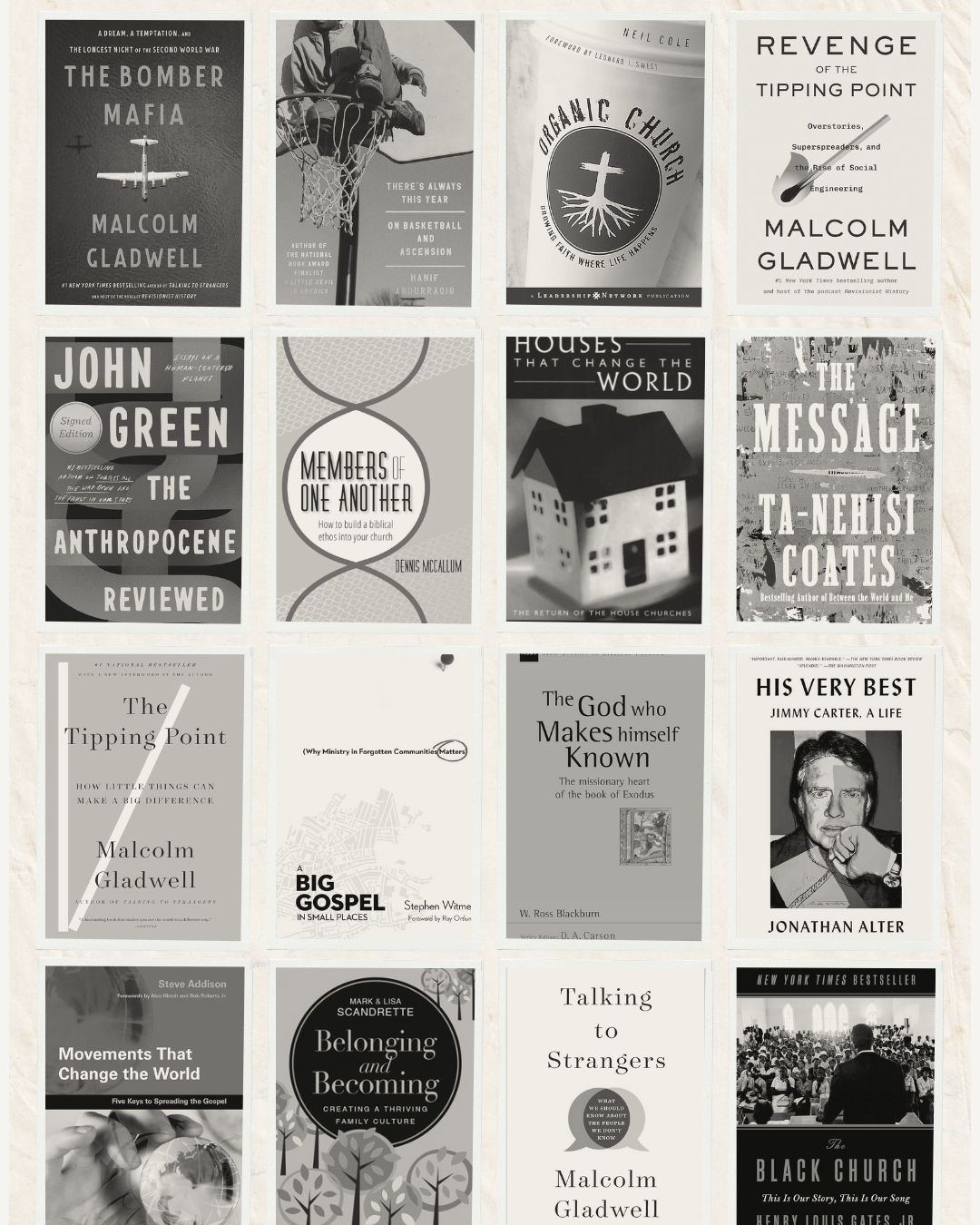
If you were to come to my neighborhood, you would notice palm trees lining my block like guards outside Buckingham Palace. If you looked a little closer, you might even notice “please do not litter” neatly spraypainted in green on sidewalks and street corners. Depending on the time of year, you might find words like “love” or “peace” either written in chalk or etched out from pressure washing on the sidewalk. But chances are, no matter the time of the year, you will catch my neighbor Liam, the man responsible for it all, at work in his yard.
To paint a picture, we don’t have a Homeowners Association where I live. We have a Liam, and honestly, that’s basically the same thing. This will stimulate all kinds of movie-and-commercial-inspired caricatures of someone measuring the height of your grass, hedges, and mailboxes. Liam’s not that. He’s our mostly harmless, generally well-meaning neighbor, who, for as long as he’s lived in his home, has been on a personal mission to elevate the neighborhood. He’ll plants trees in your yard, pressure wash your house, purchase trash pickers for everyone to clean up litter in the neighborhood, and hound the city until they repaint the roads.
If you were to ask, though, he’d say it’s his way of elevating the neighborhood. He’s lived in higher income neighborhoods and, in his mind, the only difference between their neighborhoods and ours is that they care. His thought is that maybe if he can beautify his home and make small improvements on other people’s homes, there’s a chance the owners will begin to invest as well, and our neighborhood can be better.
These days I’m grappling with the idea that mission is as simple as blessing. I often get intimidated by where to start and find myself hung up on how to build trust with non-Christian friends. I can try to strategize conversations and have the right questions and segues prepared. I’ll spin my wheels trying to determine how the good news is good news for a given people group. But what if mission is as simple as seeing a need and doing something in your power to meet it?
This is simple but not easy. To bless requires intentionality. Michael Frost in Surprise the World writes, “blessers must become students of those whom they bless. We must become attentive to the needs, fears, hopes, and yearnings of our neighbors in order to bless them appropriately[1]. The ability to listen – with our ears but also to see with our eyes is crucial to any missionary enterprise. You have to discern what would actually bless a community. It’s not just what we think, but it requires deep listening, assessing resources, and allowing those things to converge. It requires an element of love that puts aside our agenda to communicate love to another person. If I had more time, I’d explore Richard Chapman’s work on love languages and how that potentially applies to mission.
But when mission gets framed as blessing, I realize that my biggest hindrance is myself. My fear is always that I’m not the person to try this out. Perhaps I’ve misheard both God and those I want to bless. Mission involves the crossing of boundaries, which is scary. But frightening as it is, it’s also what makes us different as Christians. Society abides by social contracts and boundaries that keep us siloed. We primarily look out for ourselves which means while we don’t cause harm to anyone, we don’t go out of our way for anyone either. When someone does, it runs counter to the story we live in.
Maybe that’s why I find Liam so fascinating. He hardly ever asks to do these things. He just does it. It never occurs to him that he might not be the person to do a thing. If anything, it’s the opposite. His problem is that never stops to listen. He shows me that gifting without listening isn’t a blessing. It’s an imposition.
I’m ashamed to confess that in the past our neighborhood (me included) made fun of and laughed behind his back. The cynical parts of us suspected his gestures were less about us and more about increasing his property value and elevate the curb appeal to his lady friends. But even if that were true, it begs the question of what a person would have to believe to carry themselves that way. Liam does it because he has a sense of ownership, which gives him a sense of responsibility to the community. If that’s true of him, then what’s my excuse?
Liam may bless because he lives there, but we do it because we’ve been commissioned by God himself. Jeremiah talks about seeking the welfare of the city. This is what it means to bless. It’s not to come in with a predetermined program, but to look around and to act from a place of listening and love. It’s not to be done manipulatively, which is always possible, but from a genuine, heartfelt affection for the context. Or maybe even in hopes that in acting, your heart will grow for the people.
If blessing comes from love, I think people will notice. It may be misinterpreted but it will be received because it comes from a genuine place. Perhaps in genuinely blessing those around us, we may live the kinds of lives that inspire onlookers to ask why we are the way we are. It’s there we get to profess the hope we have in Christ.
[1] Frost, Michael. Surprise the World: The Five Habits of Highly Missional People (p. 37). The Navigators. Kindle Edition.
Last year I said the difficulty with an annual list like this is that it insinuates that every year is filled with incredible reads when, in fact, every other year is lackluster. It would seem that was a prophetic word. Whereas last year was filled with so many great books, I almost posted a midyear update, this year largely felt like a series of duds — so much so in fact, I thought I’d only have one book to recommend.
Adding to the disappointment was how much I struggled to finish anything at a timely clip. By the end of June, it looked like I’d be lucky if I read even 40 books. But then October rolled around, and I read somewhere if someone completes 50 books in a year, they would be in the top 1% of Americans. That was all the incentive I needed. Fifty became the new target. But then, I started to wonder: if I could get to 50, could I get to 52 (a book a week)? In the end, that’s what happened.
The experience of being at a deficit only to race toward a respectable number taught me some interesting lessons. Aside from being a much more goal-oriented person than I give myself credit for, I was reminded of the reciprocal relationship between reading and curiosity. You read because you’re curious but as you read your curiosity increases, driving you to read more. Because reading is one of the things that help me feel most like myself, failure to do so reveals something has gone awry in my life. But also, this last-minute push reminded me that if it matters to you, you’ll make time to fit it in. My commute to work is shorter, so I listened on the way to the gym. I listened on drives to and from events on weekends and sometimes while meal prepping for the week.
That being said, it’s hard to say this year was a great year for books. Walter Brueggeman was my theologian for the year but he didn’t resonate with me quite as well as last year’s Miroslav Volf. But I suppose the gift of a list like this is that, for all the trouble it gives me, it reminds me that even when all feels abysmal, it’s not true.
Without further ado, in no particular order, here’s the list of some of the books I really appreciated this year:
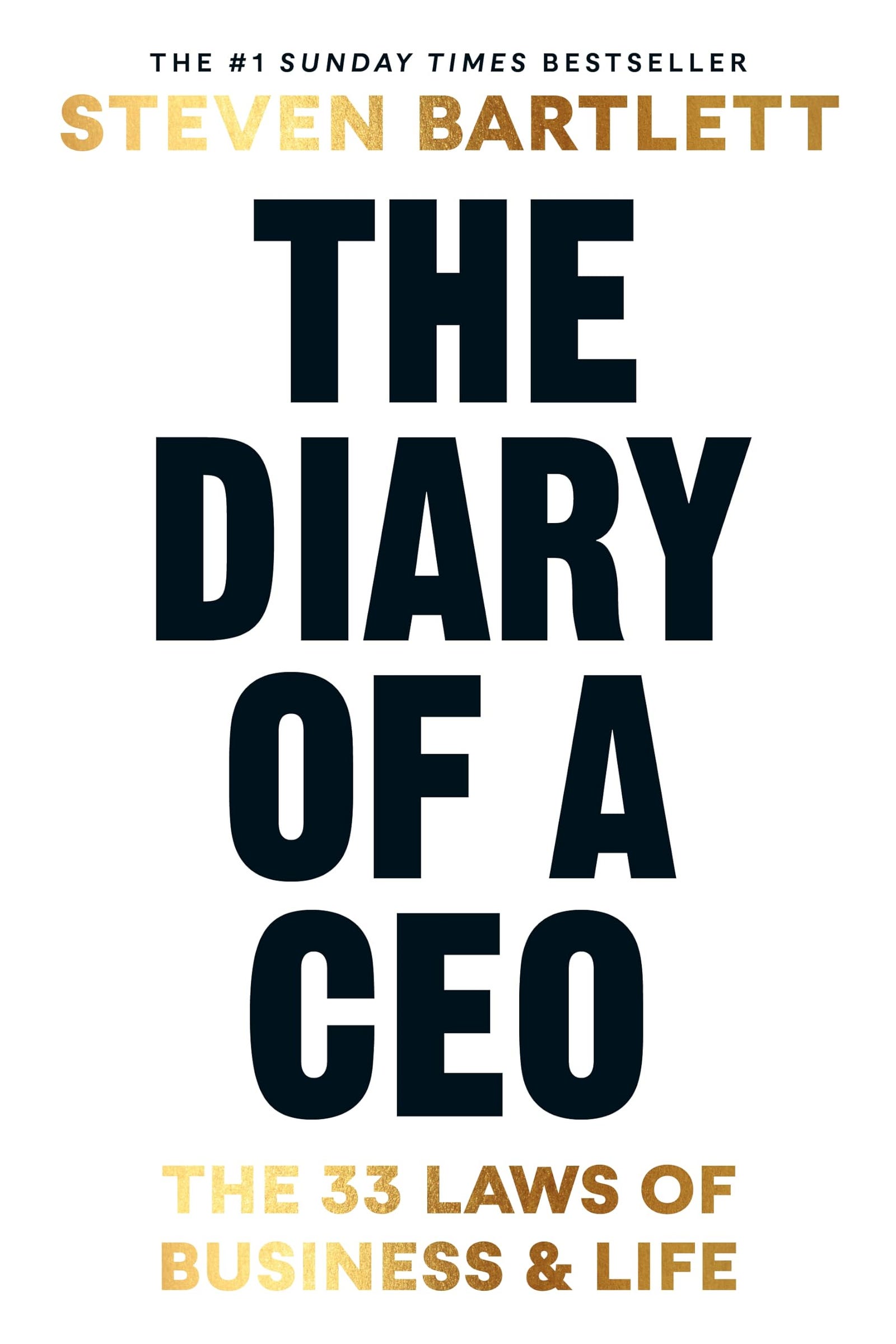
1. The Diary of a CEO — Stephen Bartlett
At the risk of sounding ageist, whenever I hear about books written by people younger than me, I get a little skeptical. Often because I wonder about the life experience of the author, but Stephen Bartlett is the real deal. Not only had he done a ton of interviews with top athletes, coaches, executives, actors, and musicians, but he also himself has been at the helm of numerous successful businesses and built up a wildly successful podcast. He brings all this to the table with punchy laws of leadership, fascinating anecdotes, and bite-sized takeaways. This was one of the first books that renewed my hope that my reading list this year wouldn’t be a failure. Warning: I’m totally robbing this book for future sermon stories and illustrations.
2. Be Our Guest — Theodore Kinni
When Steven Barr of Cast Member Church told me that Disney does discipleship better than most churches, I knew I had to get my hands on whatever material I could to understand what he meant. I figured a company that big would surely have its documents leaked somewhere online. Little did I know there was a whole book that laid it all out and it was every bit as impressive as I thought it was. If it reads like indoctrination or some sort of fluff piece, it’s probably because it comes from the Disney Institute itself. That said, the indoctrination worked. As someone who’s never been a big Disneyland fan, getting a peak behind the curtain made a believer.
3. The Anxious Generation — Jonathan Haidt
This book is hard to argue with. Not only do we have our personal experiences of what social media does to us, but now there’s research that supports our intuition. Haidt argues, quite successfully, that we’ve simultaneously become more protective over the physical lives of our children while becoming less protective of their online presence, which is infinitely more dangerous. As a parent, the challenge of this book is figuring out how to raise your kids differently than the culture around them, but I don’t think there’s any other option.
4. The Day the Revolution Began — N.T. Wright
While this list is in no particular order, this was hands down the best book I read this year. I knew it when I read it. Wright makes the argument that many of the ways we talk about the cross, suffering, and atonement are good but incomplete. He begins at beginning and the human vocation and helps fill in what we’ve long overlooked. So much of this book was beyond my comprehension but the bits I understood were brilliant. There’s a chapter in here I would love to just photocopy and give any Christian who’s trying to understand their relationship to the image of God and God’s mission in the world.
5. What the Dog Saw/Outliers/David and Goliath — Malcolm Gladwell
When Brian Sanders found out I never read a Malcolm Gladwell book, he practically fell out of his chair before assigning it as homework. It wasn’t that I didn’t want to or wasn’t interested. I guess I was waiting on the right time. A year of mildly disappointing reads certainly qualifies. It began with What the Dog Saw but then I got bit by the Gladwell bug. He writes with fascination, and you can tell he actually enjoys the process of writing. What surprised me though was how little he was interested in giving next steps or proposing some call to action. While someone like Adam Grant or Simon Sinek would give you frameworks or something, Gladwell is primarily a storyteller who provokes thought while demystifying your world. Yet, somehow, he makes it that much stranger than it was before.
Because so many of the books I’ve read have quoted Gladwell at one point in time, finally reading him almost felt like returning to the source material. You both know what the books about and yet you don’t know all the contours or directions he’s going to take it. I plan on tackling more of his work in 2025. So, thank you, Brian.
Of course, this blog wouldn’t be complete without some honorable mentions. Here are another five books I appreciated but for one reason or another didn’t quite crack the top five:
6. Praying Like Monks, Living Like Fools — Tyler Staton
I believe Christine Caine’s endorsement for this book was that it made her want to pray. I thought that was funny but now, having read it, I completely understand. As a Christian prayer is part of my everyday life. I’ve even had meaningful times and moving experiences in prayer. But I don’t know if I’d ever say I enjoy prayer. To read a book from someone so passionate about the matter was fascinating. I want to be that kind of person. I wonder what it would be like to pray for no other reason than simply preferring God’s presence. Similar to Barlett’s book, I was grateful for the stories (both personal and historical) about people’s relationship to prayer.
7. Metanoia — Alan Hirsch and Rob Kelly
If you’re familiar with any of my previous lists, you’ll know that I like books that 1) make you think and 2) make you sound smart in casual conversation. This book checks both boxes. Unpacking the idea of repentance and change in organizations, Metanoia felt like the heir apparent to The Forgotten Ways. That said, my biggest critique is that it’s almost a bit too cerebral and theoretical. It’s a book on the edge of my understanding. This would be fine, but it lacks evidence or case studies to give flesh to the ideas. I loved the framework, but I wanted to know where it came from and how they’d seen this play out in actual organizations. To their credit, I think the lack of examples is due in part because the ideas are so new there aren’t many examples to point to yet.
8. Generations — Jean Twenge
This book makes the list simply because of how truly impressive it is. Generations is a sweeping look at the six living generations we have, the forces and events that shaped them, and the massive differences between each of them. Each chapter easily could’ve been its own book (in the case of Millennials and Gen Z, she did write separate books). Twenge made me wildly appreciative of every generation before me, terrified for every generation after me, and gave language to the breakdowns we see happening around us. It’s truly well done.
9. Biblical Critical Theory — Christopher Watkin
“My aim in these pages is to paint a picture of humanity and of our world through the lens of the Bible and to compare aspects of this image to alternative visions…It does not try to explain and defend the Bible to the culture; it seeks to analyze and critique the culture through the Bible.” And what a marvelous job it does. It’s not that everything said here was new to me (certainly some things were), but it was laid out in a manner that felt comprehensive yet comprehendible. Even though this warrants a reread and a deeper study than I gave it, I appreciated how this book doesn’t give you answers but gives you tools to ask better questions and more nuanced analysis of culture. This was a perfect election-year read.
10. Bad Therapy — Abigail Shrier
This is probably my most controversial pick on this list. What I’ll say is that this being here has less to do with endorsing all the ideas in this book as much as it will make you think and give you plenty to talk about. Reading this around the same time I read Twenge and Haidt’s books were enough to scare the pants off me. But they also showed me how the term “parenting” and its subsequent genre of books are new inventions. It’s only until recently we’ve started looking to experts, gurus, influencers, and books to tell us how to do what humanity has known to do for ages. This book is a challenge for us to stop outsourcing our jobs to the “professionals”, grab parenting by the horns, and introduce your kids to healthy amounts of adversity.
The Full List (* represents audiobooks):
January
1. How (Not) to be Secular — James K.A. Smith*
2. Sabbath as Resistance — Walter Brueggemann*
3. This Tender Land — William Kent Krueger*
4. Gospel of Hope — Walter Brueggemann*
February
5. The Odyssey — Homer*
6. Growing Your Church in the Power of the Holy Spirit — Brad Long, Paul Stokes, and Cindy Strickler
7. Diversity, Inc. — Pamela Newkirk*
8. I Can’t Save You — Anthony Chin-Quee*
9. Punching the Air — Ibi Zoboi and Yusef Salaam*
March
10. Children of Virtue and Vengeance — Tomi Adeyemi*
11. The Cross of Christ — John Stott*
April
12. The Day the Revolution Began — N.T. Wright*
May
13. Chaos — Tom O’Neill*
14. Reframation — Alan Hirsch*
15. The Aenid — Virgil*
June
16. Metanoia — Alan Hirsch
17. Brave Cities — Hugh Halter and Taylor McCall
18. Man’s Search for Meaning — Viktor Frankl
19. Biblical Critical Theory — Christopher Watkin*
July
20. The Lost World of the Prophets — John H. Walton*
21. Maybe You Should Talk to Someone — Lori Gottlieb*
22. The Prophetic Imagination — Walter Brueggemann*
23. Praying Like Monks, Living Like Fools — Tyler Staton*
24. Practicing the Way — John Mark Comer*
August
25. The Anxious Generation — Jonathan Haidt*
26. Bad Therapy — Abigail Shrier*
27. Generations — Jean Twenge*
September
28. Recursion* — Blake Crouch
29. All is Quiet on the Western Front — Erich Maria Remarque*
30. Demons — Michael Heiser*
October
31. Respectable Sins — Jerry Bridges*
32. Chasing Daylight — Erwin McManus*
33. The Scandal of Leadership — JR Woodward
34. Mindshift — Erwin McManus*
35. What the Dog Saw — Malcolm Gladwell*
36. The Diary of a CEO — Stephen Bartlett*
37. The Year of Magical Thinking — Joan Didion*
38. Sacred Companions — David Brenner*
November
39. The Critical Journey — Janet Hagberg and Robert Guelich*
40. Angels — Michael Heiser*
41. Outliers — Malcolm Gladwell*
42. The Benedict Option — Rod Dreher*
43. The Rule of St. Benedict — Saint Benedict*
44. A Little Devil in America — Hanif Abdurraqib*
45. Be Our Guest — Theodore B. Kinni*
46. David and Goliath — Malcolm Gladwell*
47. CEO Excellence — Carolyn Dewar, Scott Keller, and Vikram Malhotra*
This is part of a loose series chronicling random thoughts on presidential history and how it pertains to leadership generally and ministry leadership in particular. You can read my last entry on William Howard Taft here.
In our last meeting a couple weeks before his graduation, Jordan, the student leader I’d been coaching, confessed to me he’d been having inappropriate relationships with people of the same gender. The way he described it was that he could go weeks, months even, with no hiccups then randomly, seemingly inexplicably, find himself on a binge of hookups and one-night stands.
I was completely baffled. Jordan lived in community. Not just any community. He lived in community with one of his staff workers. When asked about it, he explained to me his staff knew but never bothered to inform his coworker. Instead, he allowed Jordan to lead and didn’t do much by way of seeking out any additional help.
Though the precise reason Jordan told me this escapes me, I imagine part of it was because this was how he was ending his time on campus. Instead of leaving in triumph, he was walking away with shame and regret.
It was Aristotle who introduced to us the concept of hamartia— the flaw in character or an error in judgment that ultimately causes the downfall of a person. For some it’s greed. For others, it’s pride. For Ulysses S. Grant, the General who led the Union to victory over the Confederates in the Civil War and the 18th President of the United States, it was his alcoholism.
According to family diaries, Grant’s grandfather struggled with alcohol. Ulysses, however, really began his struggle during his time in the Mexican-American War. It became such a problem that after a particularly significant incident, Grant’s commanding officer threatened to demand his resignation if he caught him drinking again. When he was eventually caught again, he was given two options: be dishonorably discharged and face court martial or resign. He would choose the latter. Rumors of Grant’s alcoholism plagued him everywhere he went. Even in his sober spouts, it was the constant criticism and assault of his character. It followed him the rest of his life. Even now, when we talk about him, we can’t sidestep it. Some go so far as to say the throat cancer that would eventually claim his life was also influenced by years of alcohol abuse.
Interestingly enough though, for all the trouble Grant had with alcoholism, he never drank during battle in the Civil War. He only went near a bottle when he was away from the front and looking for a way to release pressure. Later, when his life got out of control and he tried to set it right by writing his biography, he was able to stay away from the substance again. Basically, as long as Grant had something of ultimate importance, something that demanded his whole person, sobriety would come naturally. It was in the absence of the something ultimate that he would settle for less than penultimate things. I think this is instructive.
I still remember the first time I realized I only had so many hours in a day. I was a college student faced with mounting schoolwork and a burgeoning social life. It seemed to me, that the more time I spent engaging in lesser things, the less time I had to spend on things that truly mattered. Consequently, the more time I spent on things that truly mattered, the less time I had to give to frivolous and unfruitful activities. Then I met Jesus and suddenly I got really busy. Between leading Bible studies, discipling other students, and living life in community, there was no time for double lives or secret sins. This is the power of telos.
When we have a purpose, some ultimate end that we are working toward, all our attention gets aimed in that direction. We recognize the limits of our time and energy, and we choose to invest it where it really matters. Without that ultimate sense of purpose, the sense that we’re working toward something meaningful, we will succumb to our vices.
The good news is that, as Christians, we don’t have to go very far for something ultimate. If Scripture is to be believed, God is on a mission to reconcile heaven and earth and each of us have a vital part to play in this great enterprise. There is a cosmic battle between good and evil and the stakes couldn’t be any higher. The question is if we remember. While it certainly isn’t a prescription for everything, what if part of how we overcome our vices is to get busy with something more important and beautiful?
Even as I write this, I’m aware of the inherent complications of this idea. The first being that we don’t get rid of bad habits as much as we replace them with better ones. We might get busy and sometimes, in our preoccupation, look up to find it’s been weeks or months since we last struggled with a particular problem but that doesn’t mean the problem is gone. While it is possible that our desires have changed, it is equally possible that our temptations waited for right the moment to rear their ugly heads and like Jesus in the desert, we’ll have to face them head-on.
Secondly, busyness doesn’t completely safeguard us against our demons as much as it just makes us a bit less accessible. Stories abound of busy people whose ambition gave birth to cataclysmic moral failures. The exhaustion from fighting on one front left them susceptible to attack on another. Idle hands may be the devil’s workshop, but an unguarded heart is his playground. We must remember the fight we’re in, guard our hearts, and get busy playing our part in the story of God. Maybe then we have a better shot at overcoming the fatal flaws that threaten to undo us.
But, at the risk of making this post unnecessarily long, I do think there is another lesson to be learned from the life of Ulysses S. Grant. Namely, the power of perception. For all the talk surrounding his alcoholism, historians disagree as to whether Grant was actually an alcoholic. While there’s unanimous agreement he had an unhealthy relationship with the substance, the nature of that relationship is unclear. One interpretation is that Grant was a high-functioning alcoholic who could go long periods without touching a drink. More generous interpretations classify him as a binge drinker born in a time with stricter cultural mores. But in some ways, it didn’t matter whether Ulysses S. Grant was an alcoholic. Because he was perceived that way, that became the truth. Billie Jean, anyone?
Whether or not we want to admit it, part of leadership is how others perceive us. If we weren’t seen as worth following, no one would follow us. While some types of authority are granted through institutions and more official agencies, real spiritual authority is granted to us in the heart and eyes of another.
Years ago, I completed a master’s program in ministry leadership and one of the key findings of my research was how critical trust is to the work of a leader. It is the primary currency we deal in and when trust is lost, it’s almost impossible to recover. The problem is that trust takes time to rebuild and, in the thick of battle, time is the one thing you don’t have. You have work to do. Best case scenario, people trust your technical competence enough to work alongside you. But in many instances, it’s easier for the leader to step aside so that someone who is trusted can continue the mission effectively.
That being said, it’s worth noting you can’t be responsible for everyone’s opinions of you. Trying to control the narrative will only leave you more exhausted and distracted from the thing you’re actually supposed to be doing. Not to mention that in some cases, people will have a certain view of you precisely because of the convictions you live by. The call then is to live above reproach, to conduct your life in light of God’s character. This is 1 Peter 2, “Live such good lives among the pagans that, though they accuse you of doing wrong, they may see your good deeds and glorify God on the day he visits us.” The accusations may come, rumors may abound, but we know vindication is on the way. The story of Daniel is a perfect example of this.
Sitting with Jordan in my office that day I was reminded that the jury is still out as long as we’re alive. Every moment is pregnant with the possibility of redemption and reinvention. Grant did not win every skirmish he came into while leading the Union, but he found a way to win when it mattered. Though he would go on to be a terrible president (once again, many of the things that made him great as a General would undercut him in this new role), when it came down to end of his life, he found a way to reverse his fortunes. This should give us hope. If we can hold on to something ultimate and live above reproach, we may be able to overcome the besetting sins that threaten us at every juncture and come out triumphant in the end.
Every year I toy with the idea of not doing this list anymore. Aside from the shocking amount of work it takes, to share my favorite reads from a given year implies that I actually read some worthwhile things. Unfortunately, that’s not always true. Every other year my reading list consists largely of duds. But this year was filled with so many great reads I had to resist sending out a list in July.
On top of the deep dive of Miroslav Volf’s work I committed to early on in the year (more on that later), I stumbled onto James K.A. Smith’s Cultural Liturgies project and developed such a deep man crush on him I ended up doing a deep dive on him too. Then I found myself reading up on spiritual formation and James Bryan Smith’s Good and Beautiful Series found its way into my world. Consequently, this is probably the least diverse, yet most Christian reading list I’ve ever had. But what I found is that this, too, is part of what Paul means when he talks about the renewing of our minds (Romans 12).
Reflecting on my reading list from this past year, it largely felt like I went back to school. While there is some fiction, some history, and some personal development here, I read a lot more theology and spiritual formation than I normally would. I largely attribute that to the combination of toying with the possibility of actually going back to school as well as our culture’s increasing desire to treat personal experience as ultimate truth. After reading some books I felt embodied that spirit, I wanted to be immersed in actual truth, solid teaching, and orthodoxy. Now, in saying that, I realize that my list is overwhelmingly populated by white men. That’s not because I believe white men hold the market on orthodoxy. It’s just how it shook out this year given my interests and reading commitments.
That being said, here we are once again. My favorite books of 2023, in no particular order:
Desiring the Kingdom — James K.A. Smith (and really the entire Cultural Liturgies series)
Last year, Smith’s You Are What You Love made my list. As disappointed as I was with the application of his ideas, I found his general framework awe-inspiring. Stumbling upon the Cultural Liturgies project was to find that framework expanded and teased out in different spheres of our life — education, worship, politics. As someone who’s work deals with leadership development, the idea that how we educate says something about what we ultimately believe about people was revelatory. How do we develop leaders in a way that aims their desires toward the kingdom? If I understood people as lovers first, how would that change the way I craft content and curriculum? While the whole trilogy is incredible, Desiring the Kingdom is the most accessible. You’ll sound smart whilestill being able to understand what’s being said.
2.The Mission of God — Christopher J.H. Wright
Because I had the privilege of coming to faith through a parachurch ministry committed to reaching the campus and the bulk of my discipleship came in the context of a network of missionaries, the idea that the Judeo-Christian God is a missionary God has been foundational to my understanding of him. However, at some point, you have to go back and do some research as to where all your ideas come from. This book took what I’ve always taken for granted and gave it depth and breadth. While there are certainly other, maybe even more, essential books and authors (I think of David Bosch or Lesslie Newbigin), Wright’s tome feels like required reading for any young missionary trying to theologically explain their life and how it finds its origin in the Bible.
3.Nobody Knows My Name — James Baldwin
If you were to ask me who my favorite writer is, chances are I’d point to James Baldwin. Reading his essay “Notes of a Native Son” as a high school senior sent me in such a tailspin, I spent the better half of the next decade studying creative writing. Imagine my surprise then when I realized this book existed andit was written before The Fire Next Time. It was like discovering lost treasure.
This book reminded me of everything I love about Baldwin and the creative nonfiction genre. I’ve long admired his ability to articulate the human experience and speak hard truths, but this time I found myself drawn to the way he describes the world around him and, in doing so, we get a sense of his person.
Many people have tried to fill his shoes since his passing, but no one has been able to. Ultimately, I think it’s because of his ruthless commitment to reconciliation. You could never accuse Baldwin of being an optimist, but he was a prisoner of hope, and it bled into his writing. Even though he died before I was born, reading this book, I found myself missing someone I never knew, wishing he were still with us to help make sense of the times we’re living in.
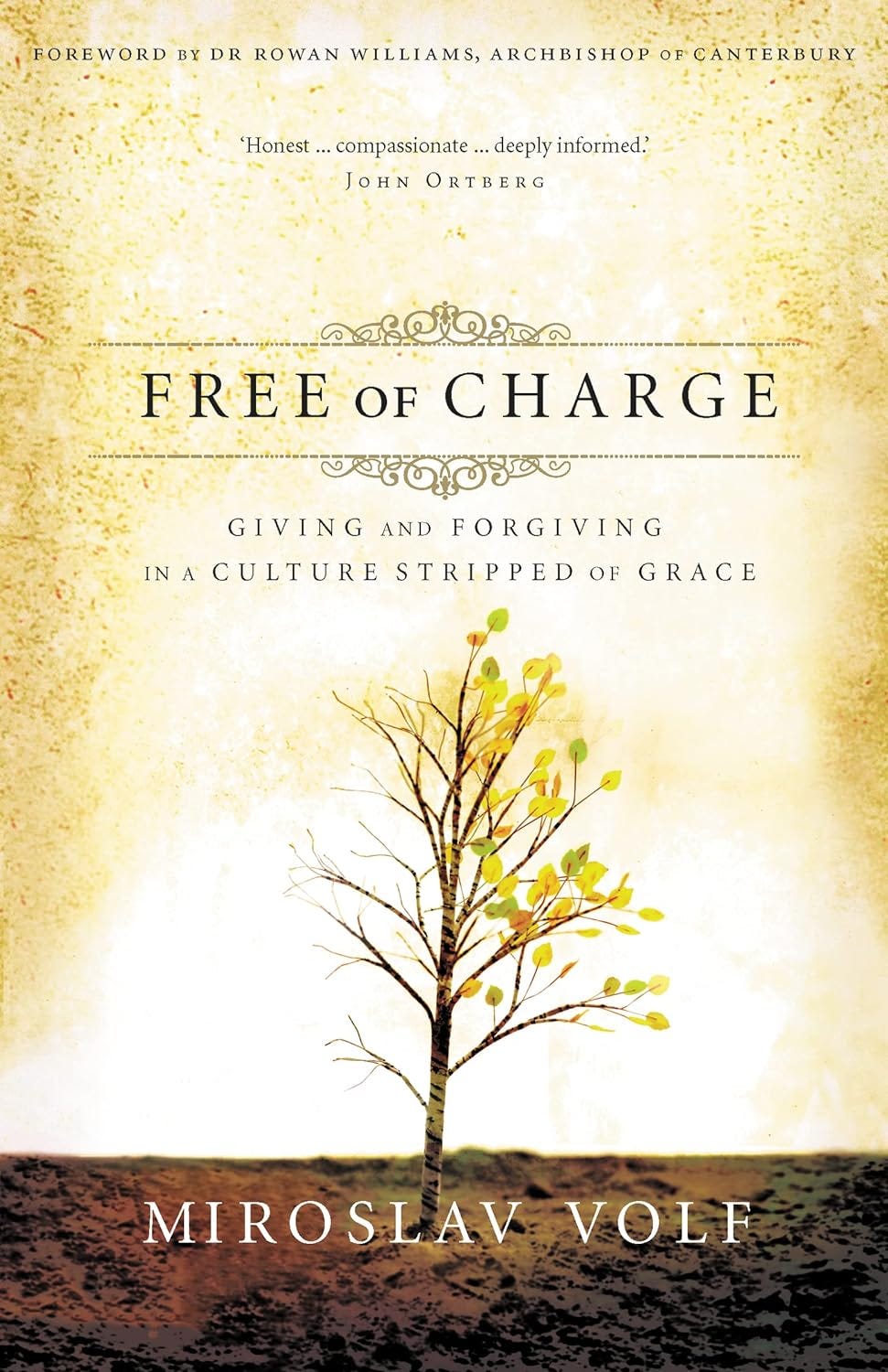
4.Free of Charge — Miroslav Volf
A couple years ago, a friend of mine told me about his practice of choosing a theologian for the year and trying to read all their works. It sounded so fascinating to me that I decided to try it out. Miroslav Volf was my theologian for 2023.
Even though I picked his name out of a hat, Volf felt like the theologian for our time. We live in a society quick to cancel without any path toward redemption. Not only does our culture feel justified in its enmity toward the other, but Christians have taken their cues from culture and have lost touch with the Bible’s core teaching on forgiveness. So much of Volf’s work challenges that notion even as he admits his personal struggle to embody his own theology.
While Exclusion and Embrace is his most robust work (and is every bit as deserving to be on this list), Free of Charge is what I read first and it spoke to me on multiple levels. Similar to Wright, it takes some ideas we’re already familiar with but packages them in such a way that it’s fresh and insightful while still being accessible enough to the common person.
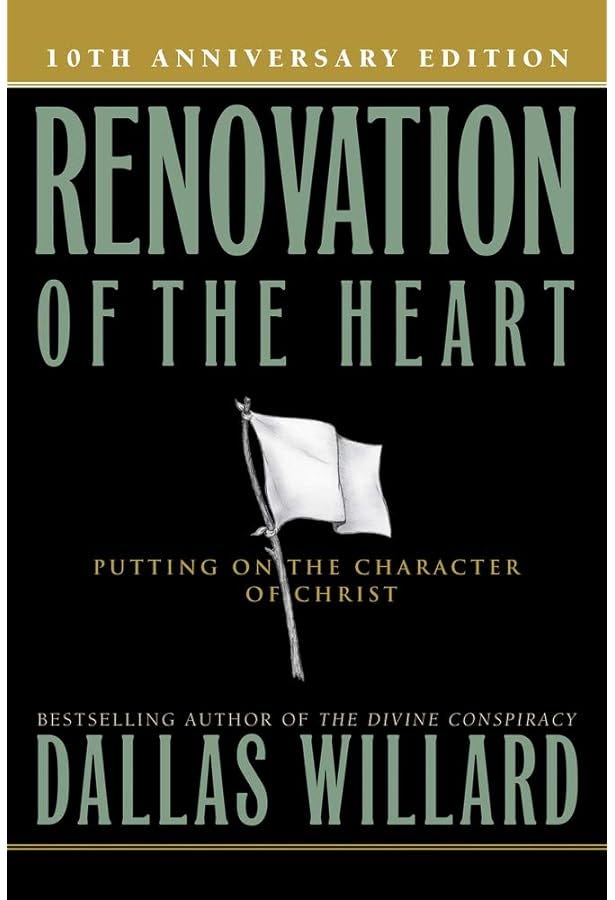
5.Renovation of the Heart — Dallas Willard
Honestly, I’ve always found Dallas Willard a bit of a dry read. Brilliant, but dry…like powdered milk dry. But maybe because of the subject and my personal interest in it, I found this book more engaging than some of his other work I’ve read. As someone who loves and is fascinated by spiritual formation, this book is the why beneath all the what’s and how’s. It’s essential reading for anyone trying to understand and create curriculums for Christlikeness. Similar to The Mission of God, there are ideas I’ve ingested secondhand that in returning to the source, I found myself walking away with a richer understanding of what I’m trying to design and accomplish.
Honorable Mentions (because it feels criminal to leave these books off)
6.Prayer in the Night — Tish Harrison Warren
As much as people loved Warren’s Liturgy of the Ordinary, I found this book to be even more compelling. Using the compline prayer as an outline, Warren shares masterfully and vulnerably about clinging to God in the midst of our despondency. Between this book and Jen Pollack Michel’s Keeping Place, I found myself thanking God for women writers who inspire wonder and curiosity in us through their beautiful work. If you’re in a tough season and needing a spiritual companion, this book will be your friend.
7.The Boys in the Boat — Daniel James Brown
I believe Donald Miller said in Blue Like Jazz that sometimes all it takes to appreciate something is to listen to someone who’s passionate about that thing talk about it. Boys in the Boat is that. Not only is it beautifully told history, but you get a sense of the marvel of rowing and all its parallels to life and leadership. It’s harrowing and uplifting and wonderfully done. If you’re a fan of Laura Hillenbrand’s Unbroken, you’re going to love this book.
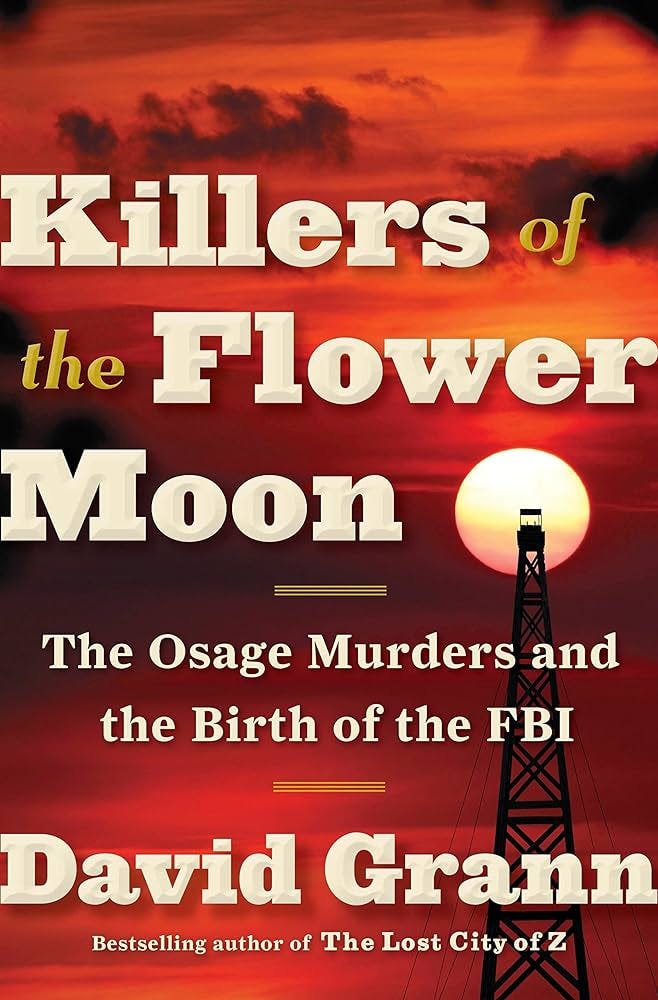
8.Killer of the Flower Moon — David Grann
Sometimes what makes a book great is the story that’s been uncovered. Killers of the Flower Moon takes a piece of relatively unknown history and brings it to the fore. In doing so, it highlights one of the wildest conspiracies against Native Americans I’ve ever heard of. It’s not just that Grann retells the story of this injustice, but, in researching, he also uncovers an even greater one. This book tells a story of greed, corruption, racism, and manipulation. Should you read it, you’ll be both gripped and horrified at the human capacity for evil.
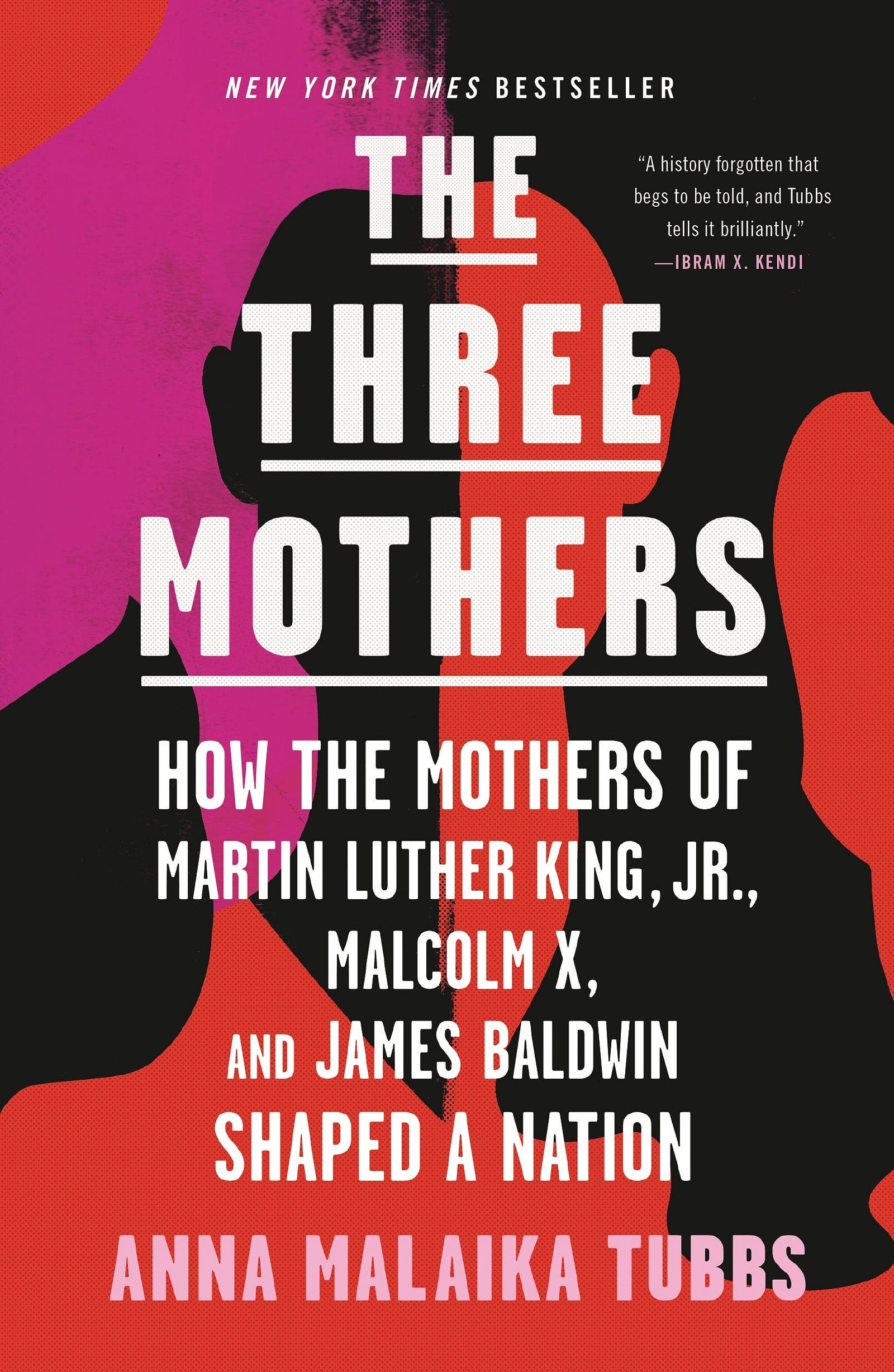
9.The Three Mothers — Anna Malaika Tubbs
Who are we without our parents and more specifically the mothers who raised us? In chronicling the stories of Louise Little, Alberta King, and Berdis Baldwin, we get a sense of just how much Malcolm X, Martin Luther King Jr., and James Baldwin got their cues from the women who birthed them. In that way, as a nation, we are tremendously indebted to these women. But I suppose that’s true of all of us and our mothers.
10.Where Are Your Boys Tonight? — Chris Payne
Full Disclosure: this is not the best book I read this year. I would argue there are better books on my more expanded list and yet this makes the honorable mentions solely because of what this era means to me personally.
As a teenager in the early 2000s, being called “emo” was never cool. If anything, it was an insult. Yet here we are twenty years later. Between things like the When We Were Young Festival, all the TikToks of “elder emos” saying it was never a phase, Amy Madden’s Negatives, and this book, it seems like third wave emo is having a moment. Whether because of some sort of vindication or we’re all just old enough not to care anymore, we’re happy to embrace the title. So much of these pages were my history and yet to hear it told back to me also made me realize how much of it is NOT my history. It truly was a unique era I don’t think we’ll ever see again.
The more expanded list:
January
1. Campus Lights — Lukas Cawley
2. Free of Charge* — Miroslav Volf
3. Church Project — Jason Shepperd
4. The Boys in the Boat* — Daniel James Brown
5. San Fransicko* — Michael Shellenberger
6. A Church of House Churches — Jason Shepperd
7. Atlas of the Heart* — Brenè Brown
February
8. Our Missing Hearts* — Celeste Ng
9. God is a Black Woman — Christena Cleveland
10. Nobody Knows My Name — James Baldwin
March
11. Stony the Road* — Henry Louis Gates, Jr.
12. Black Boy* — Richard Wright
13. The Three Mothers* — Anna Malaika Tubbs
14. Red Lip Theology* — Candice Marie Benbow
April
15. The Paris Apartment* — Lucy Foley
16. Exclusion & Embrace — Miroslav Volf
17. Desiring the Kingdom — James K.A. Smith
18. Impact Networks* — David Ehrlichman
19. A Man of Iron* — Troy Senik
May
20. Worst. President. Ever.* — Robert Strauss
21. Understanding Spiritual Warfare* — Sam Storms
22. Prayer in the Night* — Tish Harrison Warren
23. Keeping Place* — Jen Pollack Michel
24. For the Life of the World* — Matthew Croasmun and Miroslav Volf,
June
25. Imagining the Kingdom* — James K.A. Smith
26. On the Road with St. Augustine* — James K.A. Smith
27. Surrender* — Bono
28. The Light We Carry* — Michelle Obama
29. I’m Glad My Mom Died* — Jennette McCurdy
July
30. The Mission of God* — Christopher J.H. Wright
31. Awaiting the King* — James K.A. Smith
August
32. Loonshots* — Safi Bahcall
33. Reparations* — Duke L. Kwon and Gregory Thompson
34. Killers of the Flower Moon* — David Grann
35. Culture Care* — Makoto Fujimura
September
36. Renovation of the Heart — Dallas Willard
37. A Non-Anxious Presence — Mark Sayers
38. The Talent Code* — Daniel Coyle
39. Do Hard Things* — Steve Magness
40. The Good and Beautiful God* — James Bryan Smith
41. The Good and Beautiful Life* — James Bryan Smith
October
42. The Good and Beautiful Community* — James Bryan Smith
43. Life Worth Living* — Matthew Croasmun, Miroslav Volf, Ryan McAnnally-Linz
Right around the time our daughter turned two, people started asking us when we were going to start potty training. To me, it was all too soon. We were still in the thick of sleep training and now another hurdle was bring presented to us? I delayed as long as I could. I blamed it on awareness. Could she even tell when she had to go, was going, or had gone? As much as I wanted to hide behind my daughter’s lack of readiness, the truth was that I wasn’t ready.
When my wife and I finally hunkered down and bought the stool, sticker charts, and treats and committed to not going anywhere for the next few days, it was messy to say the least. Accidents happened everywhere. I would ask if she needed to go to the potty only for her to tell me no and go in her underwear shortly after. Sometimes I’d drag her to the potty kicking and screaming, force her to sit down only for nothing to happen and her go in her underwear the second I wasn’t looking. Occasionally, we’d put her in timeout for bad behavior only to find, upon taking her out, that she had gone on the floor. It wasn’t long before our daughter started specifically requesting mommy take her to the potty. If I even so much as asked about it, she would cry, if not run away. I had effectively been fired. Within a couple days I sent messages to my close friends that I wasn’t nearly Christian enough for this. If you ever want to test your sanctification, try potty training.
All this to say, my kids have reached the wonderful age where as much as I’m trying and would like to believe I’m raising them, they are, in fact, discipling me. I know that’s a cliché thing to say, but that doesn’t negate its truth. My kids have shown me what it means to be loved by God for no other reason than being his child, for his mercies to be new every morning – except usually for me it’s because they’ve exhausted their mercies for that day. Sometimes I just look at my kids and am in awe of the reality of their existence. It boggles my mind that God might do the same to us.
But as much as my kids have acted as a window into the heart and mind of God, they have also acted as a window into the human condition. My kids have shown me that we tend resist what we need most (usually sleep and food in their case) and that no one has to teach us to lie or manipulate. It’s innate to hide when we’re doing something we know we’re not supposed to. But these days, watching my three-year-old and my one-year-old play with each other, they are showing me another thing no one has to teach us to do: destroy. Our natural predilection is toward entropy, chaos, and disorder. It’s only as we grow, we learn to build; only as we mature do we learn care and maintenance.
Perhaps this sticks out to me because these days it seems we live in an age of unmaking. Everywhere we turn we are awash in calls to de-fund, de-colonize, de-center, de-construct, and dis-mantle. It would seem the virtuous thing to do is to take everything apart. If you aren’t actively trying to disassemble something, you either aren’t paying attention, are part of the problem, or both. But if kids really are a looking glass into the human condition, then I’m not entirely sure that’s true. What if our unmaking is only as virtuous as what is put in its stead? What if our deconstruction is only a steppingstone to the more honorable work of creating something more beautiful? To demolish a house is only part of the job. Necessary to be sure, but only part of it. What we do with the debris and space is infinitely more telling. The real task is to replace it with something better.
As a Christian, I believe Scripture speaks to this. The cry of our hearts isn’t just that the old order of things would pass away, that tears and death and sickness would disappear, but that God would make all things new (Revelation 21). We yearn him to replace what is for what should be. There is an act of purging and cleansing but it’s to make way for a new heaven and a new earth. Paul doesn’t just implore us to not to return evil with evil, he tells us to overcome evil with good (Romans 12:21). It’s not an empty space. It’s filled. Perhaps this isn’t revelatory to anyone, but it seems to me that we can get so fixated on the work of undoing we fool ourselves into believing that is the work when, in fact, the work is to bear witness to a better way. It’s not that we want to de-construct our faith so much as we want to re-construct it. It may mean returning to the foundations, but we return to the foundations in hope of building our lives on it.
Even as I reflect on the organization I presently work for, I am reminded how pivotal the deconstructing process was for our community. It allowed us to get to the heart of what we believe it meant to be the church and has formed the DNA of our network. Still, that deconstructing process would’ve meant very little if someone didn’t act as the mature voice calling people to shift from throwing stones to trying their hand at constructing something more honest.
But here’s the kicker: whatever we build will also be imperfect. It might be better (if only marginally), and it might not commit the sins of its predecessor, but it will still be imperfect because we are imperfect human beings. Our best attempts to solve today’s problems only creates new problems for tomorrow. However, this isn’t cause for giving up or never trying. Some things do genuinely need to be done away with. It is, however, cause for humility. We build knowing that a new generation will emerge who will want to disassemble what we’ve built. They will have to try their hand at making a better world and discover new problems. The beauty of building is that in doing so we become humble. Things are more complex than we thought, and we are not enough. We need the belief that you can change the world to start, but we are not the solution to all of humanities maladies. At best, we can play our part in slouching toward the kingdom.
This is why I think our binary between good and evil people is much too simple. Growing up, we were taught that there were good guys and bad guys. The motivations of the bad guys were always simple: they were out to hurt people and only cared about themselves. As we get older we realize bad guys are complex characters and part of what makes them so fascinating is that oftentimes they believe, somewhere in the heart of hearts, that what they’re doing is right. Even if they know what they’re doing is “wrong” or how they’re going about it is wrong, they feel justified in doing so. In their stories they are the heroes and it’s the people we deem as heroes that are the actual villains. So it is with us. As much as we perceive ourselves as heroes, we are the villains in someone else’s story and the people we see as villains understand themselves as heroes in theirs.
As Jonathan Haidt discusses in The Coddling of the American Mind, one of the great untruths of our time is the notion that there are good people and bad people. How much easier it would be if there true. The reality is as Aleksandr Solzhenitsyn writes, “The line separating good and evil passes not through states, nor between classes, nor between political parties either — but right through every human heart — and through all human hearts.” Good and evil exist in all of us. We are capable of both. We may think we’re on the right side of things but there’s our side, their side, and the truth of what God knows which will only be revealed in the world without end. This, also, is cause for humility.
To be clear, I do think there is such a thing as real evil and that we are plenty capable of it. But I think humility is more important than we realize. You may feel justified, and I might too, but to someone else it is something else. This means we must be patient and wait for the ultimate vindication and ruling of all things. We may find that we are both right and wrong. What if the most prophetic thing we can do is to humbly construct something beautiful knowing it will face its own reckoning?
Going back to the image of children, kids are balls of erratic movements before they gain some semblance of motor control. They wave their arms and everything around them gets destroyed. It’s only later they learn there are other ways to use their hands. Should they decide to take apart, it’s intentional and, sometimes, deliberate. So it is with us. As we grow, we learn that there are more sophisticated ways to dismantle a system, cleaner methods that show a level of precision. To get rid of a knot, you could either cut it out entirely or untangle it. One requires more motor functions and cognition. Moving from destruction to deconstruction might yield similar results in the end but they are different. Sometimes in deconstructing, we can appreciate the complexity and nuance of a thing. That that being said, our ability to deconstruct and reconstruct doesn’t guarantee goodness. It could just mean more ingenuous ways to be cruel. What we do with the skills we gain says it all. Hopefully, we put it to good use. But I suppose only God can judge in the end.
The year is 1905. Having rightfully won reelection four years after assuming the post following President McKinley’s assassination, Theodore Roosevelt announces that he would not make a run at a historic third term. Though the two-term limit wouldn’t be established until 1951, it’d been an unspoken rule since the time of Washington to intentionally withdraw one’s name from the ring after eight years in office. If anyone was set to break that tradition, it was the larger-than-life president. But rather than breaking precedent, he would opt to find a worthy successor — someone to continue his agenda. Two years later, he would find his man in William Howard Taft.
Taft had long been respected by his peers and the public alike. A federal circuit judge at 34 and chief civil administrator to the Philippines during McKinley’s administration, Taft was known for his warmth and kindness. It was that disposition that allowed him to flourish in the roles he was given. With Roosevelt’s initiative, it didn’t take much for others to warm to the idea. Taft would go on to secure the presidency in 1909, and Roosevelt would secure his legacy.
Imagine his surprise then when Taft started forging his own path, releasing Roosevelt’s cabinet and making decisions Roosevelt deemed to be a mistake. Not only that but it became increasingly evident that Taft was not the man for the job. Whereas Roosevelt reveled in his critics and found ways to win them over, Taft, as thick as he was, had the thinnest of skins. He had a penchant for analyzing decisions from all sides but never landing on anything. When it came to legislative matters, he never took initiative. What started as hope eventually gave way to total disillusionment, and Roosevelt, so upset with Taft’s performance, would eventually renege on his decision, and seek re-election under a third party in 1912. While it would be the closest the United States would ever come to electing a third-party candidate, ultimately, neither gentleman won the presidency. It would go to Woodrow Wilson. Roosevelt’s entry split the vote and, to make matters worse, it would be years before these political-confidants-turned-bitter-enemies would become friends again.
For the last couple years, I’ve been fascinated by the idea of leadership as a matter of both character and competence. Namely, the idea it’s not enough to just have one. You must have both. While character without competence might result in impotent and ineffectual leadership, competence without character is Machiavellian. We might have more grace for the former, hoping a person might grow into their role, but great leadership requires both. I am not original in this thought. In fact, a cursory Google search will yield articles and diagrams from people much smarter than I am. But if leadership is about character and competence, what then do we make of someone like William Howard Taft? As far as we can tell his character seemed fine. On paper, he seemed to have the qualifications for the job. After all, the man who suggested he run for office had held the position before, had been successful, and knew what was necessary to do well. But leadership isn’t solely a matter of possessing competence and character, it’s also about calling.
While personality and temperament nestle their way into character and competence, character speaks more to a person’s virtue — if a person has lived an exemplary life of morality and integrity — whereas competence addresses technical skill — the requisite experience a person has to take on this new role. If Parker Palmer is correct, and calling is a matter of letting our lives speak, asking ourselves what things we must do — not because we’re obligated by someone else, but because it’s who we are — then examining one’s personality and life belongs to calling. Frederick Buechner takes it a step further saying that calling is where our deep gladness and the world’s deep hunger meet. Taking this into consideration, it’s hard to imagine that Taft was actually called to the presidency.
I recognize to talk about calling in this instance is complicated for a number of reasons. First, because as a Christian, you can’t talk about calling without talking about God himself. It’s as Os Guinness writes in The Call, you don’t get a calling without the One who calls. And while I do believe in common grace — that is to say, that God causes the sun to rise on both the just and the unjust — I can’t speak to the spiritual lives of any party involved here. For all I know, Taft could’ve been called to the presidency. For all I know, no one is called to the presidency. I’m juxtaposing two different worlds here.
Secondly, if we remember Joseph Campbell and his work with the hero’s journey, the hero’s journey begins with an unsuspecting protagonist who possesses the seeds of greatness getting summoned on an adventure for which they weren’t looking. In accepting the adventure, they grow into the person they were always meant to be. How do we square the realities of Taft’s call to adventure and his failure? Granted our lives aren’t monomyths or fictional stories, we can’t escape the parallels of our lived experience.
Thirdly, another layer to consider calling here is that just because we’re called to a thing doesn’t mean we’ll experience instantaneous success. Each new season and new assignment bring its own share of difficulties. Some of those things never go away. It’s the nature of the assignment. This begs the question: if we can’t rely on the invitation of another or the fruit of our efforts, how can we be sure we’re actually called to a thing?
Each of us must develop a process for discerning which battles are ours to take on and which ones we should stay out of, when we should listen to what others see in us and when we should trust our gut, and what God is saying in a given moment. Because these big invitations have a way of disrupting the trajectory of our lives, they often come with an element of emotional turbulence. It can be hard to discern calling because so much of ourselves (and those we love) is wrapped in the decision.
As an Enneagram 2, I am motivated by need. If anyone says they need me to do anything, I have a hard time saying no. After all, if I don’t do it, how will it get done? I’ve found it necessary to factor in the sovereignty of God when making decisions.
Believing in the sovereignty of God reminds me that God has appointed someone for this role, and that may or may not be me. Rather than being motivated by the fear of what might happen if we don’t step into this role, the sovereignty of God wonders how stepping into a role not designed for us might prevent the actual person it was intended for from stepping into it. In stopping to remember the sovereignty of God, we can weigh urgent emotions against timeless realities. The invitation of others and our own desires and fears are held in perspective.
When holding in tension the sovereignty of God, we can arrive at what St. Ignatius referred to as indifference. We are happy regardless of whether God has called us to a particular role. That indifference allows us to hear more clearly what he would have us do. But also, the sovereignty of God says that even if I should discern incorrectly, God’s purposes will still prevail.
I can’t say if Taft was or wasn’t called to the presidency, but his life and example remind me that as a Christian, leadership is never as simple as technical skill or personal virtue. We must consider if we’re called to a thing. If we are, then we faithfully execute that responsibility by living a life of character and growing our competence.
I don’t have space to get into it here, but I suppose in there is another leadership lesson in here about succession: as much as we might be tempted to select successors because of their similarity to us, we must ultimately remember they are their own people. Even if they might think like us, they have different giftsets and frames of reference. This can be a gift if we allow it to be. As great as we might be at a role, none of us are perfect. We need other people to cover our blind spots. But also, as Heraclitus reminds us, “No man ever steps in the same river twice.” We might’ve been the right leader for the time, but who’s to say we’re the right leader for the future? It might need someone entirely different from who we are. That’s not an erasure of our legacy, it’s adding another dimension to the work we’ve started.
Interestingly enough, Taft never personally had presidential ambitions. It was more his wife and Theodore Roosevelt that wanted him there. What he actually wanted more than anything was to serve as a Supreme Court justice. His temperament and disposition favored such a role. However, when a spot became available during Roosevelt’s administration, Taft didn’t receive the nomination. The President needed him elsewhere.
In one of those truth-is-stranger-than-fiction endings, Taft would eventually get his wish. In 1921, while teaching law at Yale, President Warren Harding nominated him to serve as Chief Justice, a call to adventure he once again accepted. But this time he flourished. It was a role he held faithfully right up until his death in 1930. To this day, Taft remains the only person to have held both offices of President and Chief Justice. I suppose all’s well that ends well. Talk about common grace indeed.
“No one man should have that much power” — Police Officer speaking of Malcolm X
“Kendrick made you think about it/but he is not your savior” — Kendrick Lamar, “Savior”
Anyone who knows me well knows that I consider myself a huge Taylor Swift fan. Most people, upon hearing it for the first time, laugh with incredulity. I get it. I’m a black man with a wife and kids — not exactly what comes to mind when one thinks of a “Swiftie”. But I genuinely think she’s a talented songwriter with a knack for storytelling. And, perhaps, it’s the juxtaposition of my own fandom and the overwhelming success of her most recent efforts that’s got me thinking once again about celebrity, power, and the human inclination to worship.
On October 21, 2022, Taylor Swift released her tenth studio album, Midnights. This came on the heels on an already impressive run. Between Lover in 2019, a solid record in its own right, two critically acclaimed surprise folk albums in 2020, one of which won her her third Grammy for album of the year, making her the first female artist to have ever done so, and two re-recorded albums in 2021, no one was expecting new music any time soon. Courtesy of COVID-19, she hadn’t even toured or promoted the five albums she’d just released. Right when we all expected her to announce her next Taylor’s Version, she announced Midnights, a thirteen-track concept record telling the story of thirteen sleepless nights. Leaving behind both the upbeat pop stylings of 1989 and Lover as well as the folk sounds of Folklore and Evermore, she came with a sonically minimalistic dark popthat we hadn’t heard since reputation.
Both critics and fans went wild. Rolling Stone called it an instant classic; Pitchfork gave it a 7.0. Upon release, Midnights broke Spotify’s record for most streamed album in a 24-hour period, and Taylor Swift broke the record for most streamed artist. Not only did Midnights become the biggest pop album on Apple Music, but Taylor Swift also became the first artist in Billboard history to occupy all top 10 spots of their Hot 100 at once. Then came her tour announcement and before tickets even made it to public sale, Ticketmaster had to shut things down. Within a day, Taylor Swift sold 2 million tickets, the most Ticketmaster had ever sold in a single day. Demand crashed the site. Politicians railed against monopolies. Fans pursued legal action against the site. Taylor didn’t just break records. She shattered them and used the shards for sequin. Karma is her boyfriend indeed.
Somewhere in this is a conversation about Beyoncé and intersectionality but for now, it’ll suffice to say that Taylor Swift has entered a stratosphere of success that borders on the unimaginable. When there are people making their living hosting massive parties in which your fans come together to sing along with their favorite songs of yours without you even being there or having anything to do with it, what kind of power have you achieved?
Granted, Taylor Swift has been famous for a while now, and anyone who has followed her career can attest to the ways it has both added and subtracted from her life, how does that level of power not absolutely terrify you? Sure, there are some who revel in their idolization, surrounding themselves with sycophants. In some scenarios, the only way they could’ve achieved that level of success was by buying into their own hype before anyone else did. But what about those who understand themselves as, and desire to be, a regular human being? Suddenly it makes sense why celebrities become afraid to go outside, or to make their next move. Because when you’re elevated to the status of “god”, people put their faith in you, and the people who love you the most can quickly become your greatest detractors.
In his science fiction debut, An Absolutely Remarkable Thing, Hank Green outlines five tiers of fame. Tier 4 is what he calls true fame. This is when your humanity is so degraded people are legitimately surprised that you’re a regular human being. Your love life is the subject of magazines. You live behind a gate with an intercom on your driveway. According to his framework, true fame is a step below divinity, which is only achieved after a person has died. He has a point, but celebrity is astrange sort of objectification. You stop being a human being and start being a commodity for people to consume. The result is that you are simultaneously worshiped as a god, and therefore are understood to be out of reach, while also expected to capitulate to those who feel entitled to you. You may be god but don’t forget who signs your checks.
To be clear, this has less to do with Taylor Swift and more to do with our proclivity to worship. After all, when there are people making their living hosting massive parties in which those in attendance get no closer to the artist the party celebrates, and yet these events sell out as if it’s their actual concert, what does that say about us as people?
Whether or not we’d use these words, we are worshipful creatures. Each of us have something or someone we derive significance from or try to find fulfillment in. These things become the north star that guide our decision making. It’s as David Foster Wallace said in his address to Kenyon College, “In the day-to day trenches of adult life, there is actually no such thing as atheism. There is no such thing as not worshipping. Everybody worships. The only choice we get is what to worship.” Be it God, money, love, science, or someone else, we all have something. It’s how we are designed; and more and more we’re seeing artists pushing back on being the object of our worship.
Back in 2013, there were a number of musicians challenging the idea their music had somehow saved people’s lives. Their argument was that it wasn’t true. Music might’ve helped pull people through dark times, but at the end of the day it was their resilience that enabled them to face the day. But I wonder how much of their response also had to do with the impossible amount of pressure behind those words. Even one person saying this would be a lot, but when hordes of people in countless cities say this to you, how are you supposed to sleep at night bearing the responsibility for all those lives? I think of Kendrick Lamar’s Mr. Morale and the Big Steppers. It’s interesting to me that even as we talk about Taylor Swift, Midnights, and all her success, she’s scaling these mountains with a lead single exposing herself as the source of all her problems.
I’ve written about, and devoted serious thought to, the parts of us that desire fame and notoriety. I’ve used contemporary examples as to why we should consider fame not something to be grasped and even talked about how we shouldn’t idolize people for the sake of our souls, but I don’t know if I’ve ever considered it for the sake of the soul of the person we’re idolizing. To place them on that pedestal is to eat away at their humanity. What if the most loving thing we can do for a person is not to deify them but regard them as a human being?
This hits home for me. I have a habit of idolizing the people I look up to. Anyone who I admire can do no wrong in my eyes. Their word is gold. Immediately they get elevated to some high status, making them highly uncomfortable, until they become smaller in my eyes. Some of my disillusionment is good. My idolization gives way to a more accurate appraisal of who they are, which enables me to love the person for who they actually are and not who I picture them to be. But I imagine it to be a jarring experience for the person on the receiving end, to be once so revered and then suddenly diminished.
In fact, the first time I met Andrew McMahon, I called him god. This was before I became a Christian. When I met him again a couple years later, after having turned over my life to Jesus, I felt inclined to amend my previous statement. As it turns out, he didn’t remember me saying it. His exact words were, “I generally try to forget when people say things like that.” The irony I couldn’t have known then was just how deeply entrenched his own agnosticism/atheism was. In calling him god, I called him something he wasn’t even sure existed. Reading his memoir, Three Pianos, last year was an eye opener. This person who I practically worshipped as god was way more human than I could’ve imagined, more human than I was comfortable with. The question was if I willing to accept him as he was, or would I sit in the disappointment of having watched my false idol fall?
The reality is that the people we admire can also be wrong. They don’t have the market on truth or all of reality. We may get a polished version of them, but they are more than that. They are three-dimensional beings whose greatest strengths are also their greatest weaknesses. It’s that complexity that makes them all the more human, worthy of our love but never our worship.
This begs the question: if we really are worshipful creatures, and other people are a terrible place to aim that level of devotion, then what do we do with that inclination? As a Christian, I would make an argument for Jesus (in fact, David Foster Wallace, would also say there are compelling reasons to consider this), but perhaps that’s another conversation for another day. For now, let’s just let humans be humans.
After feeling the sting of disappointment with reading 60 books last year, I came into 2022 with the hopeful but possible goal of reading 75. Then, at some point, I stopped caring. Between two kids and everything else, reading physical books became harder to do. While I normally listen to audiobooks while making breakfast and on the commute to/from work, somewhere in the middle of the year I began to appreciate silence. Some days I was so tired I opted for music rather than more input. As doable as 75 books was, toward the end of the year I found myself clawing to get to a whopping…60 books. But rather than feeling disappointed, I’m ambivalent. I almost didn’t share my list because while I’m sure I read some great stuff this year, I can’t remember most of it. Who knows if I’ll have a list next year. If I do, who knows if I’ll even share it.
I will say this though: looking over this past year’s reading list, it feels more diverse than it’s been in a while. Some of that is stage of life (marriage and parenting), some of that is the nature of work (management, leadership, theology), but some of it has to do with a return reading practices I’ve held over the years, and reading books people recommended to me. The result is a book on mushrooms, infidelity, and parenting rockstars.
As per usual, I have no idea if these are actually the best books I read this year, but these were the ones that stirred my thinking, kept me up at night, or left me wanting to recommend to people in my life. As always, in no particular order.
The Cult of We — Eliot Brown and Maureen Farell
Ambition. Power. Money beyond all possible fathomability. As someone in a relatively high level of leadership, this book scared the bejeebers out of me. Not because I saw something of myself in Adam Neumann but of the possibility of it. Are people like Adam Neumann or Elizabeth Holmes simply deluded or are they liars? If the former, what are the implications of that on leadership and innovation? Does changing the world necessitate the belief that you can? This belief has brought forth some of the greatest innovators of our time as well as some of its biggest imposters. What if the difference between the two is whether someone was ultimately successful? In a time where visionary leadership has been almost reduced to a cautionary tale, this book sent me spiraling.
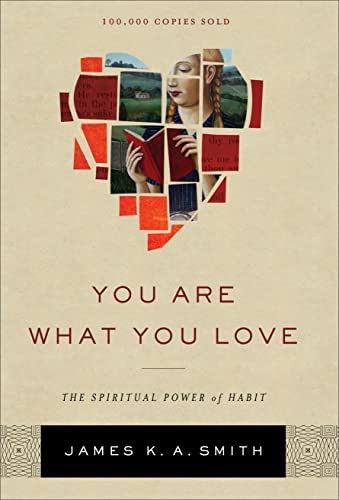
2.You Are What You Love — James K.A. Smith
What’s interesting to me is that this book did not go the way I expected/wanted it to go. I hoped that Smith would get into spiritual formation practices or rule of life patterns that would flesh out his thoughts around desire being a matter of habit, but he never did it. Rather, he takes a liturgical route in church tradition and advocates for our current spirituality to be undergirded by ancient liturgy. Still, I appreciated his exegesis of culture, found his diverse array of references personally inspiring, and his explanation of church tradition so foreign to my experiences.
3.Church of Cowards — Matt Walsh
I pretty much live under a rock and don’t really know who anybody is before I read their books (hence how Ali Wong ended up on my reading a previous year). Even now I don’t know much about Matt Walsh. Apparently, he can be a bit inflammatory. But as the saying goes, even a broken clock is right twice a day. And boy does he get a lot of stuff right. This book is a sobering indictment of American Christianity. It reminded me of when I read David Platt’s Radical as a college student. Even if you know not every church or Christian in America fits into the picture he paints, you also know he’s not making things up. It’s a clarion call to wake up and take Jesus seriously, which is always a gut check for me.
4.Biblical Preaching — Haddon Robinson
One of my personal goals this year was to grow as a communicator. I’ve sat in preaching classes before but so much of what I’ve learned has been intuitive or by watching other people do it. If I had to somehow offer a class on teaching and communication, I would probably use this book as a textbook (as have most people since its release in 1980). Robinson covers everything from outlines to exegeting culture to figure out what are biblical messages that would resonate with your community. Key to good preaching is being a student of the word and the world, which is a challenging word for me. Because this book came out forty years ago, it might be dated. But I still think there’s a lot of gold here.
5.The Power of Regret — Daniel Pink
Some books win on concept alone. This is one of those books. Pink gets under the hood on the different kinds of regrets we carry as human beings and argues that, despite our best attempts to pretend as if we don’t have any regrets, if we let them, regrets actually have the potential to make us better people. Even as he shares his findings, he addresses the tension most of us feel that despite our regrets, maybe everything happened the way it should’ve. Absolutely fascinating.
Honorable Mentions:
6.Spiritual Leadership — J. Oswald Sanders
There’s a reason this book is a classic. It is a bit dated (it came out in 1967), but it’s still relevant. You get the sense that leadership is serious business and Sanders is not playing any games. I found myself wanting to recommend this book for any young/new leader trying to get their sea legs.
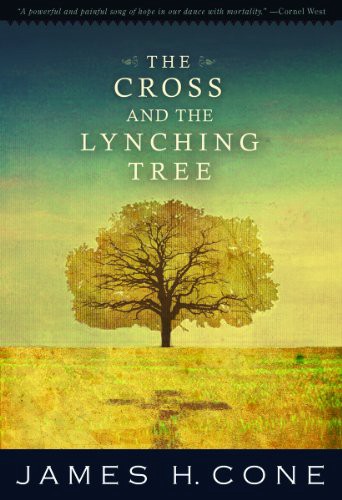
7.The Cross and the Lynching Tree — James Cone
A friend of mine has a practice of picking a theologian and reading their works over the course of the year. I decided to give it a shot. My theologian of choice? James Cone. While I don’t agree with everything Cone says or teaches, I think his insight and perspective offer something invaluable to landscape of American Christianity. Not to mention, the connection he makes to the cross and the lynching tree is so good and obvious, I can’t believe I never saw it before.
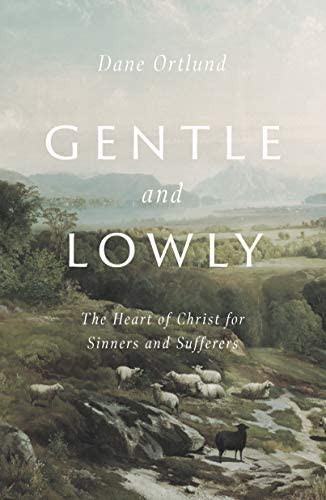
8.Gentle and Lowly — Dane Ortlund
The challenge of a book like this is that because it relies so much on an external source (namely the Puritans), there’s always a piece of you that wonders why you don’t just read that source instead. Then you hear how many volumes and how many pages that would entail. Suddenly you’re grateful someone else has done the work. Not only was this recommended to me (shout out to Nathalia Watkins) but I also found myself wanting to recommend this to my friends struggling with the love and forgiveness of God.
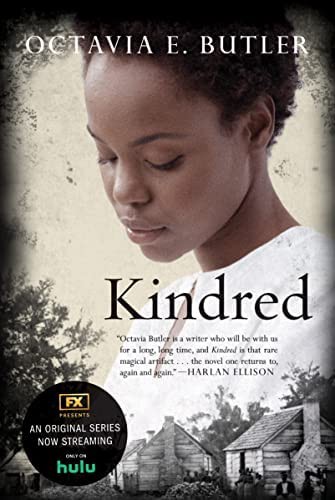
9.Kindred — Octavia Butler
Confession: as much as I love Harry Potter, I’ve never been a huge fantasy/science fiction person. But this book was different. There’s a reason why Butler is legendary. As much as we look at Ta-Nehesi Coates’ Water Dancer or Colson Whitehead’s Underground Railroad, you really can’t get any of those without this book right here. Fantasy in a way that’s not entirely disjointing but also not so grounded in reality that you lose the enchantment.
The Full List (asterisk indicates audiobook):
1. Think Again — Adam Grant*
2. New Power — Henry Timms and Jeremy Heimans
3. Get Good With Money — Tiffany Aliche*
4. Devil’s Knot — Mara Leveritt*
5. The Ninefold Path of Jesus — Mark Scandrette
6. The Cult of We — Eliot Brown and Maureen Farell*
7. A Church Called Tov — Scott McKnight*
8. The Comprehensive ENFP Survival Guide* — Heidi Priebe
9. Three Pianos — Andrew McMahon
February
10. The Nickel Boys — Colson Whitehead*
11. Somebody’s Daughter — Ashley Ford*
12. Biased — Jennifer Eberhardt*
13. Kindred — Octavia Butler*
14. The Cross and the Lynching Tree — James Cone*
15. Children of Blood and Bone — Tomi Adeyemi*
March
16. The Making of Biblical Womanhood — Beth Allison Barr*
17. The Making of a Manager — Julie Zhuo*
18. The 6 Seasons of Calling — Brian Sanders
19. Cultish — Amanda Montell*
20. This is Where You Belong — Melody Warnick*
April
21. Gilead — Marilynne Robinson*
22. Washington: A Life — Ron Chernow*
23. No Ordinary Time — Doris Kearns Goodwin*
May
24. The Obesity Code — Jason Fung*
25. Fast. Feast. Repeat. — Gin Stephens*
26. Animal Farm — George Orwell*
27. Major Labels — Kelefa Sanneh*
28. It’s Never Too Late to Sleep Train — Craig Canapari*
29. Essentialism — Greg McKeown*
June
30. Surrounded by Idiots — Thomas Erikson*
31. Bittersweet — Susan Cain*
32. The Power of Regret — Daniel Pink*
33. The Gift of Disillusionment — Chris Horst and Peter Greer*
34. Raising Your Spirited Child — Mary Sheedy Kurcinka*
July
35. What is the Bible? — Rob Bell*
36. The Last Green Valley — Mark Sullivan*
37. Gentle and Lowly — Dane Ortlund*
38. Preaching — Timothy Keller*
39. No Cure for Being Human — Kate Bowler*
August
40. Pachinko — Min Jin Lee*
41. Biblical Preaching — Haddon Robinson*
42. On Earth We’re Briefly Gorgeous — Ocean Vuong*
43. Love & Respect — Emerson Eggerichs*
44. Give and Take — Adam Grant*
September
45. From Cradle to Stage — Virginia Grohl*
46. The Lean Start Up — Eric Ries*
47. iGen — Jean Twenge*
48. Nick and Nora’s Infinite Playlist — David Levithan and Rachel Cohn*
49. Spiritual Leadership — J. Oswald Sanders *
October
50. The Leadership Gap — Lolly Daskal*
51. God’s Smuggler — Andrew van der Bijl, Elizabeth Sherrill, and John Sherrill*
Not too long ago I stopped by my alma mater to pray. It’d been on my to-do list for a while but for one reason or another I kept putting it off. That was, until I found myself with a half a day on my hands and my soul in desperate need of a retreat. Parking across the street, I made the familiar trek.
I’m not entirely sure what I expected to experience going back. Maybe something akin to the time my wife and I were shopping for wedding venues and we went back to the site of our first date. In a moment, we were nineteen again. I had borrowed my roommate’s car and printed mapquest directions to a spot my other roommate recommended. But that didn’t happen at all this time. In fact, it was the opposite. I walked through the building I had most of my classes in, retreaded the hallway I turned in my last project right before graduating. I looked at the directory to see which of my teachers were still around, went back to the park I spent hours praying and reading the Bible. I found the room I led my first Bible study for Black students, right across from the registrar’s office where I learned which classes transferred from my community college. The memories were there but no matter how hard I tried to put myself back in my old shoes, nothing quite fit.
I even visited the chapel they built the year before I graduated and caught the university president as he was leaving the building. Of all my years as a student there, I’d never once seen him out and about. I knew he had an office somewhere on campus and even heard stories about him being around — apparently, his daughter was a student around the same time I was — but the only time I saw him was when I shook his hand to receive the cover that would eventually house my degree. For a moment we exchanged glances, and I could tell he wanted to ask me if I needed something. As much as I partially wanted him to, I also recognized the absurdity of it all. What would I have even said? I was an alum who graduated over a decade ago. Even on that day I was one of 1,200 students with whom he shook hands. He wouldn’t have been able to tell me from Adam. I was practically nobody.
Perhaps, it’s worth mentioning that college is where everything changed for me. It’s where I came to faith, met my wife, and experienced my first forays into ministry. I can’t think of a more formative time. But walking the campus that day, it felt like we were strangers. With the wedding venue, it was just as we left it. It was us who changed. With my alma mater, we were both different and it was doing fine without me. It was a humbling realization.
It occurred to me we don’t think of our institutions outliving us. Sure, they may have existed before us, but what were they doing really? After all, weweren’t there yet. They may even exist after us, but only as a shell of its former self. After all, we’re not there anymore. But walking around the campus that day, it dawned on me that this had and has been the thought of every student of every class for all time. We all want to believe we’re special and irreplaceable, but if we’re all special, no one is special. As unique and special as we think we are, we are replaceable. Sometimes, it happens before our very eyes. A group of our friends graduate only to have a new batch of students come in that look and act exactly like them.
When I graduated high school, I distinctly remember feeling like the last of an era. We were the last group of students to remember both the old principal and counselor. We were the last batch of students to have a handful of teachers before they were forced into retirement. Our departure felt like the death of something. The reality is our institutions leave more of a mark on us than we do on them.
This, of course, can lead us down two ways of thinking: nihilism, which says our lives don’t matter so what’s the point; or the more existentialist route, which says we make our own meaning. We can make ourselves worth remembering through pursue fame and achievement. Certainly, I’ve felt each of these at different stages of my life. But walking that campus I was reminded of a conversation I had with my InterVarsity staff worker that presented me another option as a college student. That of legacy.
Maybe no one was going to remember us in a hundred years, but what if we could leave behind something that would outlive us? Maybe no one would remember us by name, but maybe they experience what we’ve left behind. I suppose institutions are a legacy in and of themselves but this was the parable of the Sower. Yes, there are and would be a number of seeds that bear and would bear little to no fruit, but there are and would be seeds that land in good soil and produces thirty, sixty, a hundredfold. That fruit would go on to produce more seeds and those seeds would bear more fruit. Now that fruit wouldn’t know the original seed it owes its existence to, yet it couldn’t exist without it. So, it us with us. Each of us come from a long line of people before us. We are products of their legacy. The question becomes what our legacy will be? We come and go. The wind blows and we are gone, our place remembers us no more. Time marches on without us and history gets made after us. But maybe it’s less about what we individually are and more about how we can contribute to the greater tapestry of the story of God. All these years later I’m still not entirely sure what my legacy will be, but I know it’s something I aspire leave.
Lately three similar, yet distinct images have been on my mind. The first two most definitely happened. The third of which, I’m not too sure. It seems as equally possible to have made it up as it does that it happened.
First is the time I randomly bumped into my favorite singer at a popular tourist attraction in the Cayman Islands. My wife and I had moved there nearly two years before when some friends happened to visit on their honeymoon. We’d gotten as far as the holding area of the Turtle Farm when a man with messy blonde hair blew past me with a camera draped around his neck. As quickly as it happened, I remember thinking he looked like someone I recognized. I also knew, though, the odds were infinitesimal. Like any self-respecting individual, I looked for distinguishing features. The singer I was thinking of would’ve had a tattoo of Van Gogh’s Starry Night on his forearm. Trying not to completely give myself away, I covertly glanced at the stranger. Right there, in all its glory, was the tattoo I’d watched master a piano for over a decade. Andrew McMahon, of Something Corporate and Jack’s Mannequin, was in the Cayman Islands of all places.
Second is the time I discovered my friends in Tampa were following an old classmate of mine from California on Twitter. I was a grad student at the time, and between drafting papers and revising screenplays, I was self-medicating the way we all did then: mindlessly scrolling through social media. This day, though, I noticed a post from my middle school classmate on my feed. Ordinarily this wouldn’t have been cause for concern, but I thought I had muted them. Upon investigation I found they were, in fact, muted. Looking at the post again, I realized the reason it wound up on my feed wasn’t because Twitter had ignored my preferences, it was because what they tweeted got reposted by, not just one but, two of my friends in Tampa. I nearly fell out of my chair. When I asked if each party if they knew the other or knew I was connected to them, no one had the faintest idea. Somehow my classmate had amassed such a large following, their circles overlapped without me.
Last, the one I’m most uncertain about, interestingly enough, is the time I went to grab lunch with a friend only to find a handful of college students I loosely knew sitting poolside, posing in front of their phones.
The throughline between these similar yet disparate images is people and context – the way we know people and the way we desire to be known. In the first instance, once I got past the initial excitement of running into a celebrity in an unexpected place, I felt extremely uncomfortable – almost felt like bumping into your teacher outside of school. There’s a way you know that person, a context in which you’re used to seeing them. To see them in another context feels too intimate – almost like you should not have seen them. In an effort to preserve the mystique, I tried to exit the situation as quickly as possible only to continue running into him and his family throughout the facility.
The second instance was the opposite. I knew the human being. All too well, in fact. I was in no way prepared for my worlds to collide in that way and for the person I went to school with to almost be a celebrity. She was the girl who didn’t quite fit in. When did she become this person? How ever I had known her, she was not that person anymore – at least not entirely.
The third image, to me, is the second in its infancy. It wasn’t so much seeing familiar faces in a new setting that threw me off. It was the image itself. Rather than being present to the moment, they were documenting it for all to see. I realized then that behind every Snapchat or Instagram story that seemed totally normal for me to watch on my phone was a moment that would’ve been awkward to witness in real life. Those students had the choice as to whether they wanted to exist in one place and time or everyone everywhere all at once. They chose the latter, and I felt the effects.
It seems to me the desire for prominence is at least as old as Babel – maybe even older – but the avenues to achieving it, or at least delude ourselves into thinking we have achieved it, are more abundant than they’ve ever been. Between Instagram influencers, YouTube content creators, Twitter mobs, and TikTok celebrities, we live in the age of influencers. Now more than ever before we are faced with the choice of not just who we want to listen to, but also the kind of lives we wish to live. We can choose to exist in a concentrated place for one people or we can choose some mass-marketed existence.
I suppose the reality is that we all exist in several circles at once. It’s not just that we exist in a context but that we exist in several, each one containing a different group of people. The people on your ultimate frisbee team don’t know you in the board room and vice versa. The choice then isn’t necessarily to exist in one space as much as it’s a choice between a physical, incarnate witness and a broader, disembodied presence.
What’s interesting to consider is that any influencer we look to or aspire to become does exists in a real time and space. They went to a high school, have people in their hometowns that don’t like them, and experience awkward conversations at Thanksgiving with family who don’t understand what they do. For those of us who know influencers in real, it can feel very strange. The person who you sat behind in math class may have somehow amassed a critical following but to you they’ll always be that kid who couldn’t solve quadratic equations without singing the song.
But the opposite is also true. For those who are rooted in a particular place, the moment the outside world peers in can seem especially strange. Your language and way of existing has always been for a concentrated group of people, never intended to go out broadly. Those on the outside looking in may not understand. It makes me wonder if it’s possible to exist well in both spaces, and if not, which should we lean toward.
In an interview for The Rise and Fall of Mars Hill podcast, Andy Crouch outlines two ways of thinking about power and influence. Contrasting Princess Diana and Mother Teresa, he called the first the path of celebrity and the second he called the path of sainthood. The irony is that while we all aspire to celebrity, something none of us can achieve it, sainthood, is something we could all wake up tomorrow and decide to pursue but none of us want to.
We all want to be Princess Diana, known and adored by many, seen as possessing a special something in our person– but none of us can be Diana. It’s a status reserved only for the few. We can all be Mother Teresa though. It’s just that none of us want it. The years of suffering, anonymity, and seeming ineffectiveness don’t appeal to our sensibilities. Society at large, the Western church included, has bought into the notions of celebrity and influence when all the while this other way, the way of sainthood has been offered to us. It doesn’t guarantee earthly success or international recognition, but it is the way of Jesus.
The desire to be a brand or an influencer is a desire to be more than human and yet as much as we aspire to be gods we know we can’t live under that weight. That’s why influencers, knowing how used we are to consuming their polished selves, also try showing us the unglamorous aspects of their lives – the irony is that this, too, is curated. To achieve godlike levels of power is invite godlike levels of scrutiny. We are witnessing this reckoning now. Might a smaller life save your soul?
In a world clamoring for fame or significance, to choose to serve in relative obscurity seems ridiculous. Why not be a brand? Why not be an influencer? After all, it would be false to say that such a big platform doesn’t change things. It does. Even now, at the time of writing, I’m witnessing the rise of an influencer in the CrossFit space and the effect it’s having on CrossFit as a community and business. Perhaps the biggest irony of all is that his platform is almost solely based on calling out CrossFit’s tendency to bend the rules for those with platform. But maybe the argument for a small life lived in obscure servanthood is because Jesus himself chose to change the world by entering it and confining himself to a people and a place. It was Jesus who, when offered celebrity, got the heck out of dodge, and opted instead for covert miracles, discreet healings, and Messianic secrets. I think there’s something to that.
What if we could live lives of positive mystery? What if instead of the poisoned chalice of fame, we chose the unglamorous road of obscure servanthood? We might miss out on celebrity, but we would gain gravitas – and I would argue that’s the far better prize.