
Last year I said the difficulty with an annual list like this is that it insinuates that every year is filled with incredible reads when, in fact, every other year is lackluster. It would seem that was a prophetic word. Whereas last year was filled with so many great books, I almost posted a midyear update, this year largely felt like a series of duds — so much so in fact, I thought I’d only have one book to recommend.
Adding to the disappointment was how much I struggled to finish anything at a timely clip. By the end of June, it looked like I’d be lucky if I read even 40 books. But then October rolled around, and I read somewhere if someone completes 50 books in a year, they would be in the top 1% of Americans. That was all the incentive I needed. Fifty became the new target. But then, I started to wonder: if I could get to 50, could I get to 52 (a book a week)? In the end, that’s what happened.
The experience of being at a deficit only to race toward a respectable number taught me some interesting lessons. Aside from being a much more goal-oriented person than I give myself credit for, I was reminded of the reciprocal relationship between reading and curiosity. You read because you’re curious but as you read your curiosity increases, driving you to read more. Because reading is one of the things that help me feel most like myself, failure to do so reveals something has gone awry in my life. But also, this last-minute push reminded me that if it matters to you, you’ll make time to fit it in. My commute to work is shorter, so I listened on the way to the gym. I listened on drives to and from events on weekends and sometimes while meal prepping for the week.
That being said, it’s hard to say this year was a great year for books. Walter Brueggeman was my theologian for the year but he didn’t resonate with me quite as well as last year’s Miroslav Volf. But I suppose the gift of a list like this is that, for all the trouble it gives me, it reminds me that even when all feels abysmal, it’s not true.
Without further ado, in no particular order, here’s the list of some of the books I really appreciated this year:
1. The Diary of a CEO — Stephen Bartlett
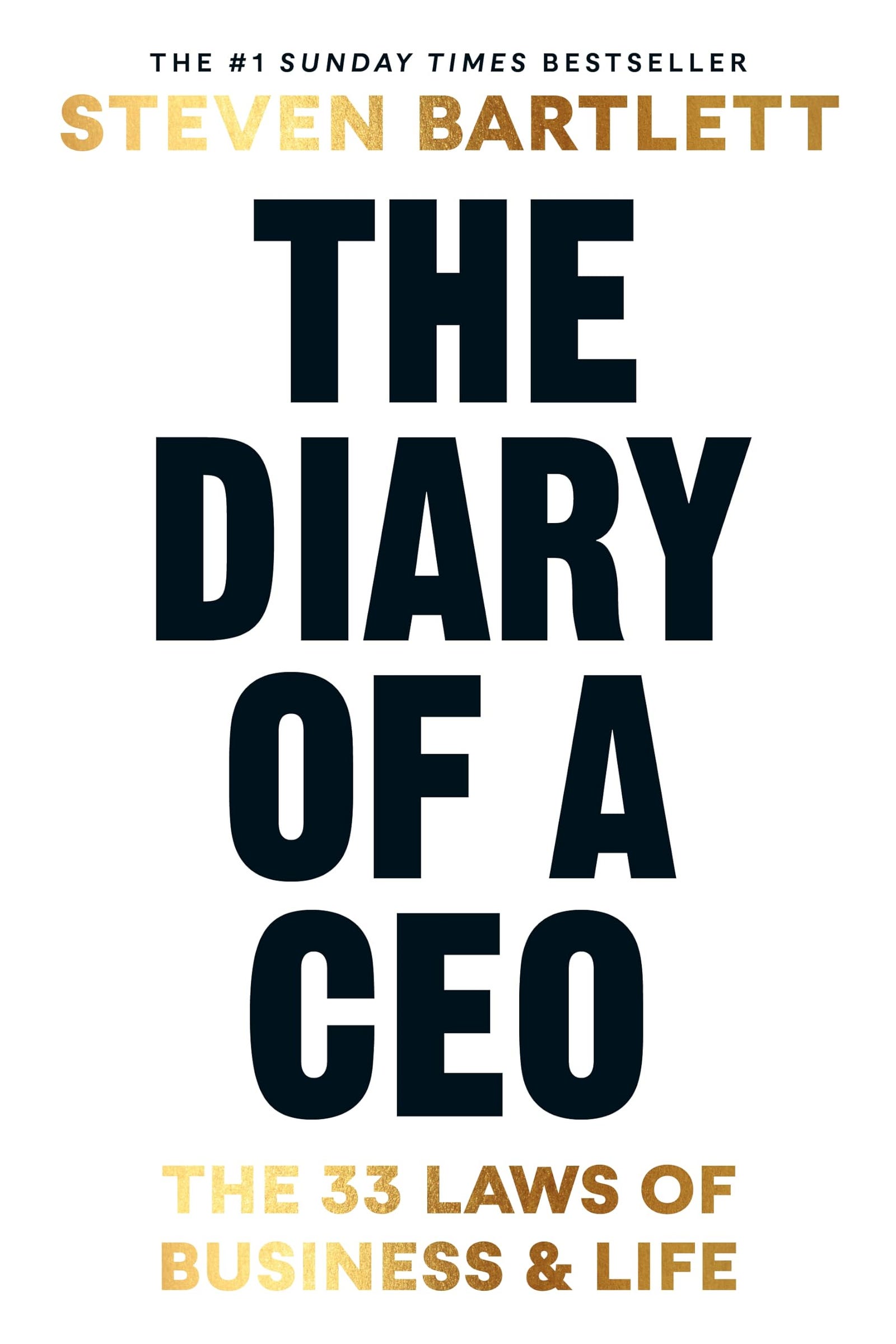
At the risk of sounding ageist, whenever I hear about books written by people younger than me, I get a little skeptical. Often because I wonder about the life experience of the author, but Stephen Bartlett is the real deal. Not only had he done a ton of interviews with top athletes, coaches, executives, actors, and musicians, but he also himself has been at the helm of numerous successful businesses and built up a wildly successful podcast. He brings all this to the table with punchy laws of leadership, fascinating anecdotes, and bite-sized takeaways. This was one of the first books that renewed my hope that my reading list this year wouldn’t be a failure. Warning: I’m totally robbing this book for future sermon stories and illustrations.
2. Be Our Guest — Theodore Kinni

When Steven Barr of Cast Member Church told me that Disney does discipleship better than most churches, I knew I had to get my hands on whatever material I could to understand what he meant. I figured a company that big would surely have its documents leaked somewhere online. Little did I know there was a whole book that laid it all out and it was every bit as impressive as I thought it was. If it reads like indoctrination or some sort of fluff piece, it’s probably because it comes from the Disney Institute itself. That said, the indoctrination worked. As someone who’s never been a big Disneyland fan, getting a peak behind the curtain made a believer.
3. The Anxious Generation — Jonathan Haidt

This book is hard to argue with. Not only do we have our personal experiences of what social media does to us, but now there’s research that supports our intuition. Haidt argues, quite successfully, that we’ve simultaneously become more protective over the physical lives of our children while becoming less protective of their online presence, which is infinitely more dangerous. As a parent, the challenge of this book is figuring out how to raise your kids differently than the culture around them, but I don’t think there’s any other option.
4. The Day the Revolution Began — N.T. Wright
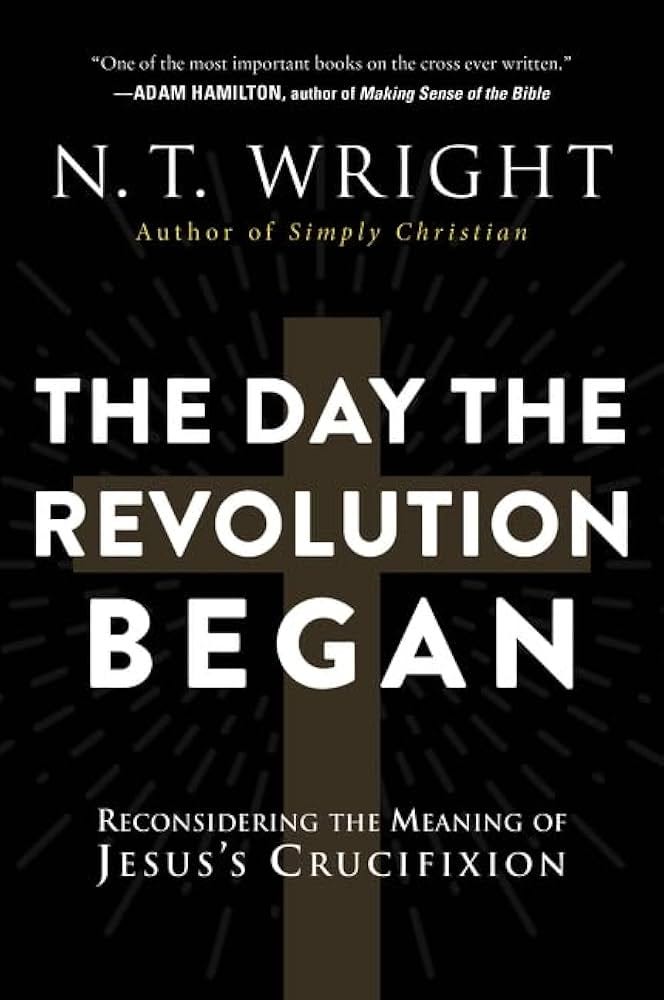
While this list is in no particular order, this was hands down the best book I read this year. I knew it when I read it. Wright makes the argument that many of the ways we talk about the cross, suffering, and atonement are good but incomplete. He begins at beginning and the human vocation and helps fill in what we’ve long overlooked. So much of this book was beyond my comprehension but the bits I understood were brilliant. There’s a chapter in here I would love to just photocopy and give any Christian who’s trying to understand their relationship to the image of God and God’s mission in the world.
5. What the Dog Saw/Outliers/David and Goliath — Malcolm Gladwell
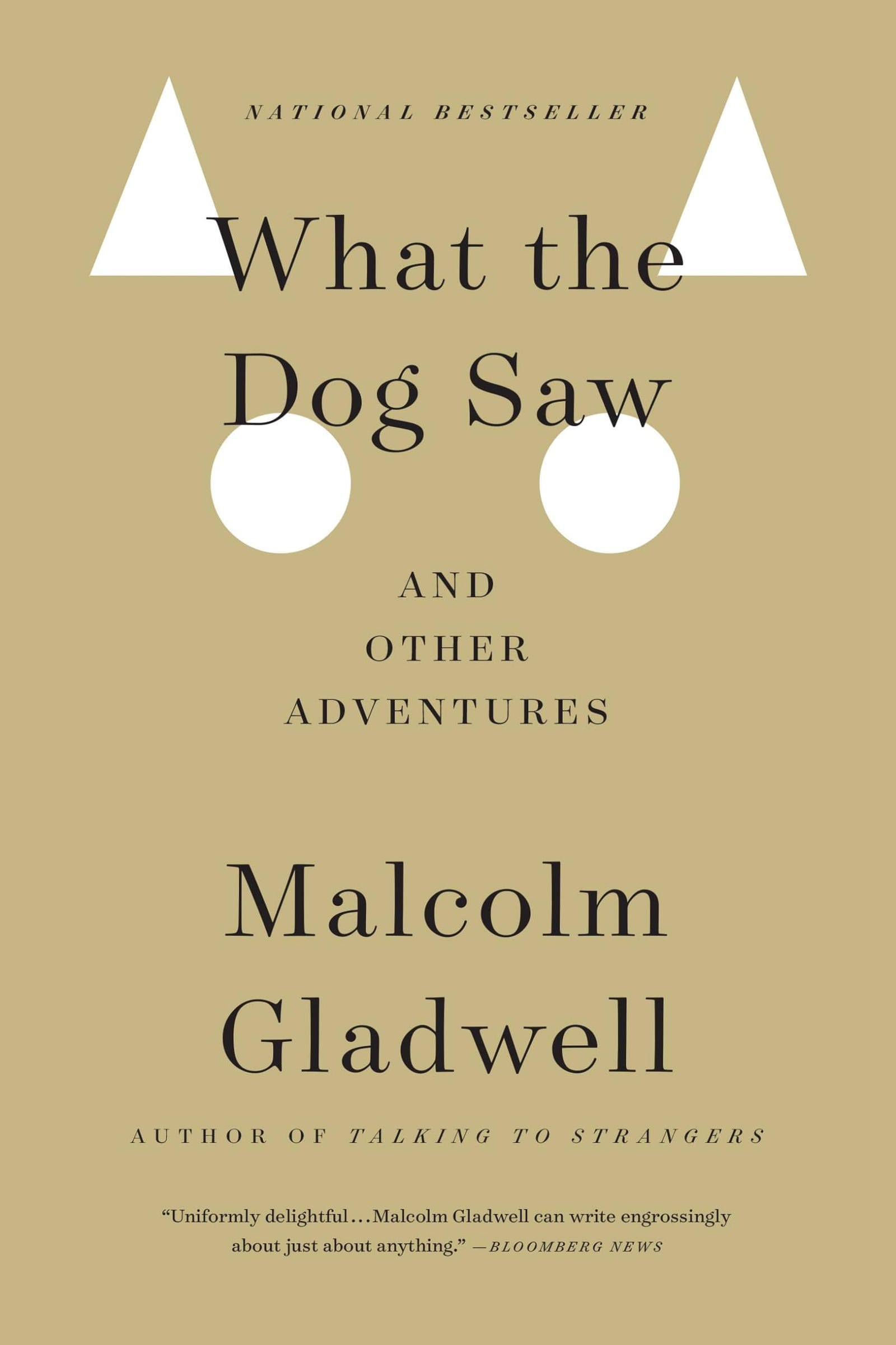
When Brian Sanders found out I never read a Malcolm Gladwell book, he practically fell out of his chair before assigning it as homework. It wasn’t that I didn’t want to or wasn’t interested. I guess I was waiting on the right time. A year of mildly disappointing reads certainly qualifies. It began with What the Dog Saw but then I got bit by the Gladwell bug. He writes with fascination, and you can tell he actually enjoys the process of writing. What surprised me though was how little he was interested in giving next steps or proposing some call to action. While someone like Adam Grant or Simon Sinek would give you frameworks or something, Gladwell is primarily a storyteller who provokes thought while demystifying your world. Yet, somehow, he makes it that much stranger than it was before.
Because so many of the books I’ve read have quoted Gladwell at one point in time, finally reading him almost felt like returning to the source material. You both know what the books about and yet you don’t know all the contours or directions he’s going to take it. I plan on tackling more of his work in 2025. So, thank you, Brian.
Of course, this blog wouldn’t be complete without some honorable mentions. Here are another five books I appreciated but for one reason or another didn’t quite crack the top five:
6. Praying Like Monks, Living Like Fools — Tyler Staton
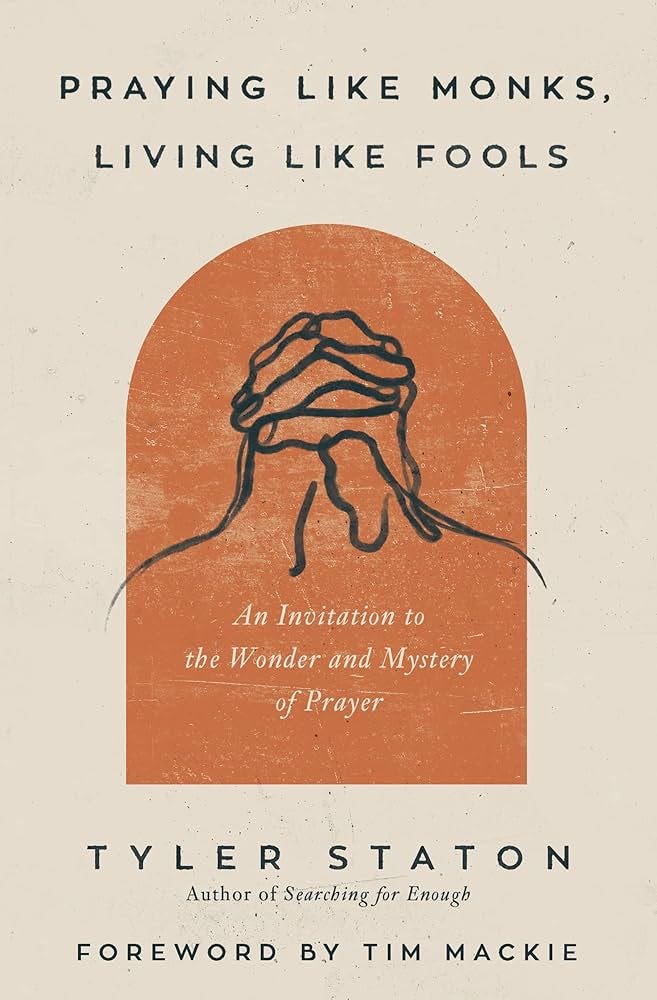
I believe Christine Caine’s endorsement for this book was that it made her want to pray. I thought that was funny but now, having read it, I completely understand. As a Christian prayer is part of my everyday life. I’ve even had meaningful times and moving experiences in prayer. But I don’t know if I’d ever say I enjoy prayer. To read a book from someone so passionate about the matter was fascinating. I want to be that kind of person. I wonder what it would be like to pray for no other reason than simply preferring God’s presence. Similar to Barlett’s book, I was grateful for the stories (both personal and historical) about people’s relationship to prayer.
7. Metanoia — Alan Hirsch and Rob Kelly

If you’re familiar with any of my previous lists, you’ll know that I like books that 1) make you think and 2) make you sound smart in casual conversation. This book checks both boxes. Unpacking the idea of repentance and change in organizations, Metanoia felt like the heir apparent to The Forgotten Ways. That said, my biggest critique is that it’s almost a bit too cerebral and theoretical. It’s a book on the edge of my understanding. This would be fine, but it lacks evidence or case studies to give flesh to the ideas. I loved the framework, but I wanted to know where it came from and how they’d seen this play out in actual organizations. To their credit, I think the lack of examples is due in part because the ideas are so new there aren’t many examples to point to yet.
8. Generations — Jean Twenge

This book makes the list simply because of how truly impressive it is. Generations is a sweeping look at the six living generations we have, the forces and events that shaped them, and the massive differences between each of them. Each chapter easily could’ve been its own book (in the case of Millennials and Gen Z, she did write separate books). Twenge made me wildly appreciative of every generation before me, terrified for every generation after me, and gave language to the breakdowns we see happening around us. It’s truly well done.
9. Biblical Critical Theory — Christopher Watkin

“My aim in these pages is to paint a picture of humanity and of our world through the lens of the Bible and to compare aspects of this image to alternative visions…It does not try to explain and defend the Bible to the culture; it seeks to analyze and critique the culture through the Bible.” And what a marvelous job it does. It’s not that everything said here was new to me (certainly some things were), but it was laid out in a manner that felt comprehensive yet comprehendible. Even though this warrants a reread and a deeper study than I gave it, I appreciated how this book doesn’t give you answers but gives you tools to ask better questions and more nuanced analysis of culture. This was a perfect election-year read.
10. Bad Therapy — Abigail Shrier

This is probably my most controversial pick on this list. What I’ll say is that this being here has less to do with endorsing all the ideas in this book as much as it will make you think and give you plenty to talk about. Reading this around the same time I read Twenge and Haidt’s books were enough to scare the pants off me. But they also showed me how the term “parenting” and its subsequent genre of books are new inventions. It’s only until recently we’ve started looking to experts, gurus, influencers, and books to tell us how to do what humanity has known to do for ages. This book is a challenge for us to stop outsourcing our jobs to the “professionals”, grab parenting by the horns, and introduce your kids to healthy amounts of adversity.
The Full List (* represents audiobooks):
January
1. How (Not) to be Secular — James K.A. Smith*
2. Sabbath as Resistance — Walter Brueggemann*
3. This Tender Land — William Kent Krueger*
4. Gospel of Hope — Walter Brueggemann*
February
5. The Odyssey — Homer*
6. Growing Your Church in the Power of the Holy Spirit — Brad Long, Paul Stokes, and Cindy Strickler
7. Diversity, Inc. — Pamela Newkirk*
8. I Can’t Save You — Anthony Chin-Quee*
9. Punching the Air — Ibi Zoboi and Yusef Salaam*
March
10. Children of Virtue and Vengeance — Tomi Adeyemi*
11. The Cross of Christ — John Stott*
April
12. The Day the Revolution Began — N.T. Wright*
May
13. Chaos — Tom O’Neill*
14. Reframation — Alan Hirsch*
15. The Aenid — Virgil*
June
16. Metanoia — Alan Hirsch
17. Brave Cities — Hugh Halter and Taylor McCall
18. Man’s Search for Meaning — Viktor Frankl
19. Biblical Critical Theory — Christopher Watkin*
July
20. The Lost World of the Prophets — John H. Walton*
21. Maybe You Should Talk to Someone — Lori Gottlieb*
22. The Prophetic Imagination — Walter Brueggemann*
23. Praying Like Monks, Living Like Fools — Tyler Staton*
24. Practicing the Way — John Mark Comer*
August
25. The Anxious Generation — Jonathan Haidt*
26. Bad Therapy — Abigail Shrier*
27. Generations — Jean Twenge*
September
28. Recursion* — Blake Crouch
29. All is Quiet on the Western Front — Erich Maria Remarque*
30. Demons — Michael Heiser*
October
31. Respectable Sins — Jerry Bridges*
32. Chasing Daylight — Erwin McManus*
33. The Scandal of Leadership — JR Woodward
34. Mindshift — Erwin McManus*
35. What the Dog Saw — Malcolm Gladwell*
36. The Diary of a CEO — Stephen Bartlett*
37. The Year of Magical Thinking — Joan Didion*
38. Sacred Companions — David Brenner*
November
39. The Critical Journey — Janet Hagberg and Robert Guelich*
40. Angels — Michael Heiser*
41. Outliers — Malcolm Gladwell*
42. The Benedict Option — Rod Dreher*
43. The Rule of St. Benedict — Saint Benedict*
44. A Little Devil in America — Hanif Abdurraqib*
45. Be Our Guest — Theodore B. Kinni*
46. David and Goliath — Malcolm Gladwell*
47. CEO Excellence — Carolyn Dewar, Scott Keller, and Vikram Malhotra*
December
48. Grief is For People — Sloane Crosley*
49. Walking Disaster — Deryck Whibley*
50. Playing Through the Whistle — S.L. Price*
51. Sellout — Dan Ozzi*
52. The Genius of Jesus — Erwin McManus*
 Tomy Wilkerson